RUSSIAN FEDERATION SITREP 8 December 2011

ELECTION RESULTS. The almost final results give a Duma with 238 seats for United Russia (down 77); 92 Communists (up 35); 64 Just Russia (up 26) and 56 Zhirinovskiy’s party (up 16). (Interactive map by regions). United Russia will dominate, but no longer be able to bully. Which is a step in the right direction.

ELECTION FRAUD. There is a lot from the usual media outlets about widespread, even game-changing, fakery. I would suggest that those who believe this reflect on what might be termed the Prime Law of Election Fixing: Don’t fix it so that your party loses votes and seats. Especially when they have been saying that every previous Russian election was fraudulent. This should be obvious to anyone. Secondly the results accord well (as previous elections have) with opinion polling (indeed United Russia did a bit worse). This piece shows that the results are consistent with numerous polls (here’s a reasonably perceptive forecast from two months earlier and another, based on polls, from the day before). To persist in assertions of game-changing fraud in the face of these facts is just ridiculous. By the way, if you go by the English-speaking media you would think that foreign observers thought the elections were frightful: not so, here are a number of foreign observers saying that they were good enough. The OSCE report does not suggest big-scale fixing either; indeed it reads like other OSCE reports: administrative resources, lack of competition, some bad behaviour.

LOGIC. There is a simple point of logic here, I think. Opinion polls told us that United Russia was sinking and that even Putin’s ratings had declined. This is the factual basis for pieces like this one. So far so good. But to then to claim that the election was so fraudulent that – that what? the Communists actually won? United Russia gave itself 10-20-30 points? Enough to get a majority? – contradicts the very opinion polls that were the basis for the first observation. (Was there cheating? Of course there was, and not just by United Russia. There’s cheating in all elections everywhere. Enough to be a game-changer? I doubt it.)

IMPLICATIONS. Half the vote is hardly a repudiation of United Russia but such a reduction is hardly an endorsement either. For some months opinion polls have been showing a weariness with this assemblage of power-worshippers. It is a wake-up call. I would expect more “retirements” of officials: not because they failed to cook the results but because they have been repudiated by the electorate. I do not believe that it will affect the presidential vote greatly (opinion polls again: The Team’s ratings are still pretty high) but it might/might result in Putin having to go to a second round of voting. On the other hand, given that the number two candidate will probably be Zyuganov of the Communists, it might not. However tired Russians may be of Putin, they must be even more tired of Zyuganov who ran for President in 1996, 2000 and 2008. To say nothing of Yavlinskiy (1996 and 2000) and Zhirinovskiy (1991, 1996, 2000 and 2008). Of these, Putin is certainly the least stale. But I still think he should have retired. At any rate both Medvedev and Putin are taking it pretty calmly; but, given the polls, they must have seen it coming. And, once again, the “liberals”, so beloved of the West, failed. Here, as a change from “Putin stole it”, is a piece saying the Communists are back.

CHECHNYA. Chechnya, again, produced a 99%+ turnout with 99%+ voting for United Russia. I actually believe this result is correct (plus or minus). Kadyrov’s father once said Chechens had been fighting for independence for decades without success and it was time to try some other method than war. I believe Chechens still want independence but understand that it would come at a terrible cost and then be followed by invasion by jihadists. This is, after all, what happened after the first war in 1994. It is therefore necessary never to let Moscow suspect that independence is what you are after (sovereignty is an acceptable public aim) but to move gradually in that direction. In this respect it is useful to be able to cover your moves by showing outstanding “loyalty” to Moscow. Chechnya is the sort of society in which the word can be put out through the tayps and families that it is in everyone’s best interest to turn out and vote for Moscow’s party. And something similar can be seen elsewhere in the North Caucasus where United Russia always gets big numbers.

DEMONSTRATIONS. We shall see what Saturday’s demonstrations bring.

MAGNITSKIY. The case was re-opened, we are told, so that his relatives can have his name cleared.

NAVY. A task force, led by the aircraft carrier Admiral Kuznetsov, has left Severomorsk for the Atlantic and Mediterranean. Not, we were told last week, bound for Syria.

© Patrick Armstrong Analysis, Ottawa, Canada (see http://www.russiaotherpointsofview.com/)

RUSSIAN FEDERATION SITREP 1 December 2011

DUMA ELECTION. There have been innumerable reports that Russians are sick and tired of political realities; we hear this every time an election comes up (after all, a prevailing meme is that Putin & Co only hold onto power by cheating and manipulation) and it’s forgotten until the next time. However, there does seem to be some genuine evidence that people are getting tired of United Russia. This is The Team’s dilemma: while it has successfully constructed a “pedestal party”, something that eluded Yeltsin, United Russia is still little more than a grouping of those in power and those who want to be. Many of its apparatchiks are not very popular in local areas. Nonetheless, one could hardly expect the perennial, and unchanged, opposition of the Communists and LDPR to offer much more hope. I expect that United Russia will remain the largest party but would not be surprised to see its percentage cut – no bad thing (Putin would agree: less of a rubber stamp and more of a Duma that thinks. Not, of course, that he wants any discontinuity). What I’m less confident about is what the disgruntled will do. Many I suspect will stay home but it will be interesting to see whether Just Russia, Right Cause or Yabloko profit from the mould that has grown on United Russia. For years now the Communists and LDPR have shared a (declining) sector of the vote and I don’t think that their total share will much change. We’ll find out on Sunday. As for those who are convinced Russian elections are rigged, I recommend Anatoly Karlin’s piece which shows that results accord with earlier opinion polls. (And for those who think they’re rigged, all I can say is that that would be an improbable amount of rigging.)

CFE. Washington has decided to stop passing CFE information to Russia “after repeated efforts, including high-level efforts to save the treaty”. Then the UK did the same citing Russia’s failure to fulfil its obligations. Now let me see if I’ve got this right: after long negotiation and re-negotiation of this effective arms reduction treaty, Russia ratified it in 2004. NATO, after sticking in some new conditions, and ignoring the satisfaction of one of them, did not. Russia complained for years and finally withdrew in 2007 from a treaty only it, Belarus, Ukraine and Kazakhstan had ratified. And it’s Russia that that won’t cooperate?

WTO. At last! A Swiss-developed compromise has been accepted by Tbilisi and Moscow and it appears that Russia will be admitted next month. Bidzina Ivanishvili says Saakashvili was pressured into agreeing; I am inclined to agree with him and it’s another sign of how much standing he has lost since his adventure in South Ossetia. Obama promised Medvedev that he would start to end Jackson-Vanik (and how indeed could the two co-exist?).

RUSSIA INC. The Central Bank of Russia now estimates private capital outflow for 2011 will be US$70 billion, not US$36 billion; it was US$38.3 billion last year, down from US$56.9 billion the year before. Not a good sign at all.

SOMETHING NOT TO BE IMAGINED TEN YEARS AGO. Medvedev’s economic adviser says that Moscow is prepared to help stabilise the European economy via the IMF; the sum mentioned was up to $10B.

RUSSIAN WARSHIPS TO SYRIA. CGS General Makarov denies it. But, once again, Moscow, fearing that all change is for the worse (vide Kosovo and Libya), is trying to be the middle man.

RELIC. As a reminder that there is more to Russia than Kremlin rumourology, a relic important in Orthodoxy has attracted enormous crowds of worshippers throughout Russia.

STALIN. Given the endless and unending nonsense about Putin and Stalin, I doubt the creation of a GULag Museum in Moscow will be noticed any more than the inclusion of sections from the GULag Archipelago on school reading lists is remembered.

THE MIGHTY RUSSIAN ARMS BUILDUP. The Air Force expects about 90 new or refurbished aircraft in 2012 and the Navy 8-10 diesel submarines by 2020. Pay increases. Not much: this is the USAF’s 2012 shopping list.

TROUBLE IN PARADISE. The presidential elections in South Ossetia have gone sour; the local Supreme Court has invalidated the results; the opposition candidate insists she won. Trouble coming. Discussion here.

ANOTHER “COLOURED REVOLUTION” FAILS. The newly elected President of the Kyrgyz Republic (Otunbayeva kept her word not to run) says the Manas agreement will not be renewed. Now that Pakistan has shut down NATO supply lines into Afghanistan, I would advise NATO to start taking Moscow’s concerns seriously.

© Patrick Armstrong Analysis, Ottawa, Canada (see http://www.russiaotherpointsofview.com/)

RUSSIAN FEDERATION WEEKLY SITREP 27 October 2011

DEMOGRAPHICS. The Russian demographic problem – which, incidentally, has its roots in the Soviet days and is mirrored in most FSU countries (Latvia perhaps the worst) – was the consequence of problems at each end. Low birth-rates and high infant mortality combined with too many early (and largely preventable) deaths. But, contrary to the customary poorly-sourced pieces that the Western MSM is rife with, progress is being made. Anatoly Karlin has been posting on the subject for several years and is well worth reading. His latest argues that Russia’s population has actually increased and is today higher than it was in 2009. While the natural population increase is still negative – but less and less so every year – the increase has come from immigration. Improvements have been made at both ends of the problem but Karlin provides data showing that deaths by alcohol, suicide and homicide have seen great reductions. They are still rather higher than they should be but these are factors where comparatively easy resolutions can be found. In short, it appears, barring some new disaster, that the Russian demographic crisis is on the way to being solved; that the various government programs are having their effect and that increasing prosperity will continue to raise life expectancy and reduce infant mortality. Thus Russia’s “demographic crisis” is yesterday’s news and the improvements – with more expected – serve as another of the many reasons that Russians generally approve of the Putin team. It cannot be said too often that the reasons for the Team’s popularity, trust and support in Russia is not that opinion polls are fixed, or that the mass media is as it was in the Soviet days or that Russians are naturally subservient (all assumptions of the Russophobic tendency) but because Russians can see every day the effect of a governing team that, generally speaking, does what a government is hired to do.

WTO. The long dreary saga of Russia’s attempt to join the WTO drags on. Although a member of the G8, firmly in the top 15 economies of the world and an important trader, being on the waiting list for years, promises of support from Washington and others, Russia has still not joined Zimbabwe, Papua New Guinea, Mongolia, Guinea-Bissau and 149 other countries in the group. On Friday Foreign Minister Lavrov said all the terms had been completed. All but one that is: the tradition is that all members must agree and Georgia, a member since 2000 – a gift to Shevardnadze I believe – does not. The latest from Tbilisi is that an official calls for Moscow’s agreement to “jointly monitor the Russian-Georgian border with international observers”. US Congressmen are getting into the act. Russians can be forgiven for seeing all this as another door being slammed in their faces; always a new goalpost, further down the field. We shall see – there is some indication that the EU is tired of Georgia’s intransigence.

LUZHKOV. Confirming what many suspected, the head of the Presidential Administration has said that the reason for firing Luzhkov as Mayor of Moscow was not just his “extremely inefficient city management” but also “the horrible level of corruption.” Luzhkov has threatened to sue. Medvedev has just ordered a probe into the 2003 sale of land in Moscow. The land had been set aside to house foreign embassies but was sold to a company belonging to Luzhkov’s wife.

POLITKOVSKAYA. Another former policeman has been charged with organising her murder.

GRAIN EXPORTS. Putin has said that he expects Russian grain exports to total 24 to 25 million tonnes this year. They were greatly reduced last year because of the bad summer

PATRIOTIC WAR. It’s autumn and time for 1812 war re-enactments. Getting bigger each year.

GAS WARS. Ukraine has given up the idea of contesting at the Stockholm Court of Arbitration the 2009 gas price deal negotiated by then-PM Tymoshenko. Kiev still hopes to get a lower price by negotiations and PM Azarov is optimistic. Ukraine has extensive shale gas deposits and has recently signed exploration contracts with Shell and ExxonMobil and is hopeful of freeing itself from dependency on Russian supplies.

© Patrick Armstrong Analysis, Ottawa, Canada (see http://www.russiaotherpointsofview.com/)

RUSSIAN FEDERATION WEEKLY SITREP 20 October 2011

THE PROGRAM, MEDVEDEV. On Saturday Medvedev laid out some of his program in an interview. He began by declaring that he and Putin were a team “That is especially true since we have very close political approaches, we are allies and in everyday life we are close friends”. His prevailing theme is: “our country really needs modern development and gradual but steady reforms.” Once again we see the caution that predominates in their attitude; understandably I believe. He is currently pushing the idea of what he calls “extended government”. I’m not quite sure what he means by that but make a guess from things he said. He referred several times to an incident one of his questioners brought up – the improvement of local tram service that had come about only after his direct intervention – and emphasised that that was a serious defect in the way government worked in Russia: “Everything gets done this way here, it seems. It doesn’t matter who is president; you just have to make your voice heard at the very top, and then things will start to move. But we need to change this kind of decision-making system”. When we add to that his repeated references to the importance of the New Media in enabling two-way communication between government and people (“[In Russia] historically the authorities have been far removed from the people”) I assume that his “extended government” idea involves much more feedback (another word he used a lot). But we will see if the idea is fleshed out. So, his message is that it’s the same Team with the same Program. But slow but steady is the word.

THE PROGRAM, PUTIN. Putin’s similar interview was on Monday. Confirming my suspicion that caution is the ruling passion of The Team, he reminded his listeners of just how bad things were in the 1990s and said: “When the country faces hard times and is steering itself out of crisis, political stability is essential.” And “We survived a very difficult period in the 1990s. Only in the 2000s did we begin to rise up and establish internal peace.” Will Medvedev’s initiatives continue? “We are on the same page on strategic matters” and, later. “I want you to understand that we are doing this together”. He re-stated the larger aim, unchanged from many previous speeches: “Our main task is to ensure this country’s development and to improve people’s living standards” and enumerated the tasks as: “a stable political situation at home” with “an efficient and growing economy” “a fully secured defence capability” (a passage, by the way, that will be taken out of context; read it: just over half way down the page, answering Kulistikov). And he reiterated a favourite Medvedev theme that the economy is far too dependent on energy exports and must be diversified. Altogether quite complementary to Medvedev’s interview and, again, the emphasis that they are in agreement on the big issues.

THE DECISION. The two interviews shed a little more light on the decision to switch places. It now appears that the switch was more conditional than first we heard. Medvedev intimated, as he has done a couple of times, that the fact that Putin’s popularity was higher was the decider. Putin intimated that Medvedev had set his style and strategic program and that as PM he can put it into effect. And through both interviews run the themes “stability” and “caution” and “cooperation”. The other great theme was that the job was not finished: improvements to be sure, but not there yet and a deep conviction that it could all fall apart yet.

FREE TRADE. Putin announced that many CIS members had agreed, after years of negotiations, to set up a free trade zone which he hoped would be signed by the end of the year. They are Armenia, Belarus, Kazakhstan, Kyrgyzstan, Moldova, Russia, Tajikistan and Ukraine. The original proposal came from, he said, President Nazarbayev of Kazakhstan about ten years ago. Nazarbayev has, indeed, been calling for closer economic ties for 20 years. In his interview he emphasised that this was a free trade zone (“We will put to use the competitive advantages that we inherited from previous generations, and we will transfer them to a new modern base”) mentioning the EU and NAFTA as examples. Not the re-creation of the USSR: “We are not interested in taking on excessive risk or creating extra work for countries that are lagging somewhat behind for various reasons”. (Indeed, what strength, by any scale of measurement, would Russia gain from absorbing, say, Tajikistan? Or Ukraine or Belarus, both of which are seeking loans to keep afloat? Territory yes, but at what cost? Unwilling populations, debts, economic stagnation; where’s the gain in that?)

CHECHNYA. Kadyrov announced that a commission of clergy and elders had, over the past year, resolved all blood feuds. If true, this is a substantial achievement.

© Patrick Armstrong Analysis, Ottawa, Canada (see http://www.russiaotherpointsofview.com/)

RUSSIAN FEDERATION WEEKLY SITREP 13 October 2011

EURASIAN UNION. Putin has spoken of his desire to form a “Eurasian Union” and this has attracted some attention. This is hardly the first time, though, that he has spoken of such a thing. We already have the Russia-Belarus union, which doesn’t seem to amount to much; the Customs Union of Russia, Belarus and Kazakhstan, which is still in its infancy; the Shanghai Cooperation Organisation of Russia, four Central Asian countries and China and several partial members which is largely security-based. And, of course, the CIS which is as yet undead. None of these is especially vibrant. Moscow and Astana have been the prime movers of most of them and they are founded on the remaining common economic/trade and security concerns of the countries involved. Perhaps the Customs Union will be expanded farther; that will depend on how successful it proves to be. There is, therefore, nothing especially new about Putin’s desires. However some things have changed in the 10 to 15 years that these ideas have been floated. The most significant change is that the attraction of the West/European “model” has waned somewhat. The dreams of acceptance, integration and equality that were alive in the 1990s have been replaced with a rather drearier reality. And the reality – unexpected 15 years ago – that Russia is doing best.

DEMOGRAPHICS. The Minister of Health and Social Development has made some claims about improvements at the start point of the demographic problem. She says the infant mortality rate has declined about a quarter in the last five years and overall births are up about 14% over the same time. Thus there continue to be improvements. Money is being spent on pre-natal care, better hospitals, trauma centres et al and it’s having an effect. This site allows comparison between Russia and other countries and we can see the improvement. We can also see that Russia’s birth rate is higher than that of most European countries or any western former USSR state. In this respect, I find pieces like this one irritating because there is never any comparison of Russia with anything else. Then there was the flurry of headscratchers about the supposed number of Russians who want to emigrate, again without any comparison: for example the UK, Germany or the Netherlands. Had the writers done any actual research, their headlines would have read “Russians want to stay in their country more than many Europeans want to stay in theirs”. But, it’s Russia: write what you like as long as it’s bad.

PRE-TRIAL DETENTION. Two more deaths in Russia’s terrible pre-trial detention centres. A school teacher accused of taking a bribe on Saturday and a man accused of violating copyright laws on Tuesday. Hardly the sort of crimes to justify being parked in an insalubrious slammer while investigators leisurely go about putting a case together. Investigations are proceeding we are told but, as the Magnitskiy case shows, they can take a very long time.

CORRUPTION. A warrant has been issued against another investigator in the case against an Interior Ministry investigator accused of soliciting a bribe in a customs fraud case.

BEREZOVSKIY. What promises to be a long and expensive lawsuit between Boris Berezovskiy and Roman Abramovich has opened in London. The former is suing the latter over something that happened some time ago: I am not interested in the details so much as in the secrets of the Russian plutocrats at the end of the 1990s that the trial may reveal.

PUTIN IN CHINA. The subject matter seems to be energy and trade. Putin said that the trade total this year should be US$70-80 billion and hoped to reach US$100 billion soon. China is now Russia’s largest trade partner. Energy dominates Russia’s exports and Moscow would like to diversify and that was the subject of several agreements.I think everyone would agree that given the current difficulties in the world economy, in the United States and in the European Union, Russian-Chinese cooperation plays a stabilising role and benefits both our economies and our nations”. A hint, I think, of where he (and China) may be looking in the future.

TYMOSHENKO. Former Ukrainian PM Tymoshenko has been sentenced to seven years in prison after being found guilty of abuse of office over the signing of the gas deal with Russia in 2009; the judge also ordered her to pay US$189 million in compensation for losses incurred by Naftohaz. She will appeal. No one is pleased with the verdict. Meanwhile, another case has been opened against her.

© Patrick Armstrong Analysis, Ottawa, Canada (see http://www.russiaotherpointsofview.com/)

RUSSIAN FEDERATION WEEKLY SITREP 6 October 2011

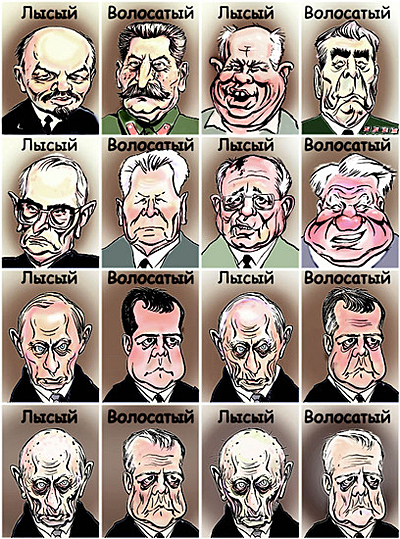
ON AND ON. THE REACTION. I’ve been reading a lot of reactions and I believe they can be summarised as follows. To Russophobes it was confirmation of their line that Russia is a dictatorship, always has been and always will be. Russian liberals are disheartened, some to the point of despair. There are the beginnings of mockery and the re-appearance of political jokes. (Here’s bald and hairy). People like myself (I leave the classification to you, Dear Reader) are also disheartened and see The Decision as a failure of Putin’s imagination and confidence in the political system that he created. Many (probably most, in fact) Russians, however, support his return to the Presidency. And here I see several themes. A common one is that Medvedev was unsuccessful – a few are very condemnatory. They argue that he was unable to move “modernisation” forwards and failed to get much response from the West to his overtures. Another common theme is that Russia faces dangerous or difficult times ahead at home and abroad and that only Putin can be the timoneer. Some argue that with Putin at the top and Medvedev as PM, “modernisation” can be pushed through to the finish. Among these commentators we often see a conviction that stability and predictability take priority over everything else. And maybe that’s the clue. Russia had a pretty miserable time in the Twentieth Century and the Putin years do stand out as much better than anything then. Primum non nocere is engraved on Russian hearts. A quiet life is a lot better than the alternatives that Russia has lived, and died, through.

PUTIN V.2 AND THE WORLD. While there is a measure of uncertainty in the future from Russia’s point of view – the Middle East and the future of the Eurozone are two significant concerns – some factors since 2000 have changed in Russia’s favour. Washington is no longer so confident that it is the supreme power in the world. NATO expansion is likely dead. The “coloured revolutions” were a bust: we’re unlikely to see any more. As to the sunny European future so many of Russia’s neighbours thought was waiting for them, Latvia’s recent parliamentary elections offer a pointer. Riga had two great aims in the 1990s: NATO and EU membership and it achieved both; giving it, as it thought, both security and prosperity. But it has been very hard hit in the financial downturn and it is interesting that a Russian-friendly party did best in this election. I believe that the other states that thought their best future was one in which they turned their backs on Russia will be reconsidering. And not because of the so-called Russian threat but because of disappointed hopes in the “European option”. When a Pole reads that the leader of the British Labour Party admits that the last government “got it wrong” on border controls and he realises that Miliband is talking about Poles and other East Europeans, he realises that EU membership had subtleties that he didn’t understand before. Quite apart from being on the hook to bail out Greece & Co. Thus I would expect more cooperation and less hostility from Russia’s neighbours: not Russian hegemony but the sharp bite of reality.

SYRIA. This time around, having learned how NATO can expand such resolutions, Russia vetoed the UNSC resolution in Syria. It has been met with huffing and the usual attribution of ulterior motives. But it’s quite simple: Russia is a status quo power which would prefer no change because it fears it will not benefit (primum non nocere again). It doesn’t like NATO deciding national borders and who should rule them. It is sceptical of the sincerity of “humanitarian” motives. It feels it was burned by the Libya resolution which quickly morphed into a full-out overthrow of Khadafy. It wonders who’s next on the list. No so hard to predict.

GAS WARS. Neither Ukraine nor Belarus can afford to pay even the present discounted gas prices and both want to re-negotiate. A Ukrainian delegation is in Moscow now and Lukashenka claims that he has won a reduction in price. Meanwhile Ukrainian prosecutors demand a 7-year jail term for former PM Tymoshenko accusing her of “abuse of office” in negotiating the current contract. Moscow will extract something for reducing the price further: it long ago gave up selling energy to its neighbours for cheap prices in return for… well, what exactly?

POLITKOVSKAYA. Apparently acting on Pavlyuchenkov’s assertion that he was the organiser of the murder, Lom-Ali Gaitukayev, currently serving a jail term, has been brought to Moscow for questioning.

THREATS. Those who will claim that Putin’s Russia is our enemy should bear in mind the threat assessment of the Security Council Head (and long-time FSB head) that terrorism, drugs and illegal migration are the leading threats. He observed, correctly, that these “non-traditional” threats require international cooperation. Indeed; they are most other countries’ leading threats too.

© Patrick Armstrong Analysis, Ottawa, Canada (see http://www.russiaotherpointsofview.com/)

RUSSIAN FEDERATION WEEKLY SITREP 29 September 2011

ON AND ON. Apart from the fact that I was about as wrong as wrong can be in my election bet, I am not happy with Putin’s decision to return. I believe that leaders have a “best before date” – eventually they run out of their possibilities. The wise leader quits at the top of his game after having trained up his successors. But, having said that, who has ever done it other than Sulla or Washington? Not Thatcher, Churchill, Roosevelt, De Gaulle etc etc. Putin, possibly the best leader that Russia has had in its thousand-year history, has, I believe, succumbed to the delusion that he is indispensible. Will he prove to be, as he evidently believes, the Ataturk or Lee Kuan Yew of Russia? Or merely the Turkmenbashi or Lukashenka of Russia? No one would say that he is stagnant now, but what about after six or twelve years more?

Although Medvedev said that this was always the agreement, it is possible that the ever-cautious Putin has come back because he fears the future and believes Russia will be better off with The Boss openly at the top of the power structure. Perhaps there is unrest in The Team that only Putin can settle (Kudrin’s departure suggests this could be the case). Perhaps he believes the apparent decline in support for United Russia can only be reversed by him (while he has often complained about the lack of initiative and creativity in United Russia, he has also said many times that it is a necessary instrument). Or does he foresee coming international troubles that will require his steady hand? (The next US President is likely to be a Republican with a reflexive antipathy to Russia. The EU – a vital trade and investment source – is melting down. The future of Belarus and Ukraine is iffy. China is rising. NATO is again re-drawing the map. The “Arab world” is in flux.) We still don’t know the details.

Many Russians don’t care about what people elsewhere think about them, but it does matter and it will affect them. The anti-Russia lobby, encouraged by the return of the “steely-eyed ex-KGB officer” (another six years of that as if Putin had never done anything else!!!) with whom they are strangely obsessed, will get a new impetus. (Here’s the first and it’s all there: pipelines, Politkovskaya, Stalinist, weakening Ukraine and even (!) the Third Rome). The lobby will agitate for protection for countries “threatened” by him. Will we see another push to expand NATO? Missiles in Poland? More support for Saakashvili the putative Nobel Peace Prize winner? More attempts to fiddle with the political balance in Ukraine and other neighbours? A constant drum-roll of bad and selective press reports that will scare off investment? This will affect the environment in which Russians have to live.

We have to ask whether Medvedev ever really was President. Or was he, as many said all along, just a placeholder, only there because of Putin’s unwillingness to violate the letter of the Constitution? If the system that Putin and his team created after the ruin of the Yeltsin years can only work with him in charge, then it doesn’t work.

I do not expect The Plan to change although its flavour will. Putin is less friendly to the West (and why wouldn’t he be? – endless NATO expansion, NATO throwing its weight around, still nothing on WTO or Jackson-Vanik, bogus “coloured revolutions”). And every case of prickly behaviour or scepticism about Western motives will be spun by the anti-Russia lobby as another threat.

There can be no serious doubt that the most impeccably fair and open election would return him with a huge majority – most Russians will be delighted at the return of such a proven and trusted leader. And, in his wake, United Russia (although with a lot of new faces) will sweep the Duma elections which have now been turned into a referendum on him. So the political system will be stable. But stability can become stagnation quite easily.

But I would have been more confident in the future of Russia had Medvedev run and Putin stepped back – perhaps as leader of United Russia – to keep an eye on things. It is necessary, for the long term, that Russia not be the personalist system that it has been for so long.

© Patrick Armstrong Analysis, Ottawa, Canada (see http://www.russiaotherpointsofview.com/)

RUSSIAN FEDERATION WEEKLY SITREP 15 September 2011

POLICE REFORM. The Interior Minister says police who may be exposed to temptations of bribery will have to take regular lie-detector tests. He is pretty pleased with the results of the “combing” process. I think, to put it mildly, he’s over-optimistic. The Investigative Committee says that police officers have been charged with 70 crimes in the last 10 days. And that’s the ones they’ve been charged with. Obviously the teeth on the comb were set too far apart.

POLITKOVSKAYA. Perhaps a break-through: a former policeman, Dmitriy Pavlyuchenkov, was arrested and charged with organising her murder. The theory is that he was a contractor and the investigators say they know who ordered her death. The prosecution theory has always been that the man who ordered it is no longer in Russia. Pavlyuchenkov’s name came up early in the case but he seems to have been able to avoid charges and apparently functioned as a sort of secret witness for the prosecution. From the beginning I have believed that she stumbled – perhaps unknowingly – across some piece of information a Chechen “biznesman” didn’t want known. Nothing to do with Putin or the government.

BLAME RUSSIA! As we all know Russia gets a lot of bad press: accusations are swiftly made and it’s only later that we learn the truth. Polish prosecutors have charged two officers with negligence over preparing the flight that crashed killing President Kaczynski. As the Russian report said: poor training. The Ukrainian prosecutor’s office says there is no evidence that Viktor Yushchenko was poisoned by dioxin and cited a lack of cooperation from him. When will we find that the Litvinenko case was bogus too?

LIBERALS. I thought that Right Cause (Правое дело) might prove to be a viable liberal contender; but it has just committed suicide. Russian liberals simply will not compromise.

MATVIYENKO. Moved a step closer to becoming Chair of the Federation Council when she was elected to a seat in the St Petersburg legislature and resigned as Governor (mayor).

ALCOHOL. Some bright news on Russia’s age-old curse. A government medical official says alcohol consumption in cities (but not in the countryside) is down to 15 litres per capita from 18 the year before.

SPACE. With the demise of the US Space Shuttle, the ISS now depends on what had been reliable Russian resupply missions up to now; but the latest freighter crashed. RosKosmos has responded by postponing the next supply mission while it makes test launches. There is a private contract but that will be some time coming.

KHODORKOVSKIY. The Supreme Court has ruled that Khodorkovskiy and Lebedev were illegally held in pre-trial detention for three months during their second trial. It earlier made a similar ruling on another chunk of time. Now what? At a minimum they should have the time served there to count against the latest sentence.

MARRIAGE. The Exxon-RosNeft deal is potentially very big. But these deals often go sour (vide BP) so we will see if this one does better.

GAS WARS. Ukraine is trying to get a lower price: the head of Naftohaz thinks US$230 tcm would be “fair”. Why is that “fair”? it is 57% of the current price for Germany; the contract Ukraine is trying to get out of calls for a discounted price of 88%. Ukraine is not now and never has paid the “full price” for Russian gas. It also says it will greatly reduce purchases. But how? Shale gas won’t arrive that soon. Meanwhile the Nord Stream gas pipeline has begun operating and is expected to be carrying gas directly to Germany next month; this will weaken Kiev’s negotiating position as a carrier (and help prevent it from siphoning westbound gas as it did before). The IMF has told Kiev (in what would be called the use of “the gas weapon” if Moscow were saying it) that it must put up the price of gas for domestic consumption if it wants the next tranche (but PM Azarov says Ukraine doesn’t need it). Hard to see a happy ending: why should Russia discount its price even more in return for nothing but an ephemeral gratitude? And how can Ukraine afford to pay and how can it reduce its consumption without a good deal of pain and political cost?

BELARUS. The decline continues. And then what happens?

IRAN. The Russian sale of S-300 SAMs to Iran which has been announced, warned against and deplored, but never actually happened, has now led Teheran to sue. Medvedev banned the sale a year ago.

© Patrick Armstrong Analysis, Ottawa, Canada (see http://www.russiaotherpointsofview.com/)

RUSSIAN FEDERATION WEEKLY SITREP 18 August 2011

THEN AND NOW. The 20th anniversary of the 1991 coup attempt and its sequella is upon us and I agree with Gorbachev’s comment that the coup planners “were truly idiots, and they destroyed everything. And we proved ourselves to be semi-idiots, myself included.” The 17 March referendum showed, with important exceptions, that the bulk of the population wanted to remain united. (The results foretold much of the coming fighting and secessions too). But it didn’t happen and there was no small misery in consequence of the breakup. However there is an interesting piece comparing ordinary life in Russia then and now in terms of purchasing power. In essence, despite much remaining poverty (20% or so), per capita income is up about 45% since 20 years ago. 45% is not that much perhaps over two decades, but the growth comes post-Putin after the seemingly unending fall throughout most of the 1990s. No wonder most Russians support Putin/Medvedev. It would be interesting to see a similar calculation in the other 14 former SSRs. In that connection, I leave you with this quotation from Ukraine’s then-PM Kuchma in 1993: “…like everyone else, I believed that Ukraine is so rich that it provided for the entire [Soviet] Union. It turned out that it is, in fact, rich. However, was it really a provider?” I believe many SSRs thought that they put in and the RSFSR took out and the moment Moscow was gone they would be better off. Not true, as they have had opportunity to learn and reflect on.

DEMOGRAPHICS. The government program continues to improve the situation at both ends. Tatyana Golikova reported that the mortality rate had decreased 2.8% in the first half of the year – the reduction was driven by declines in deaths from cardiovascular causes (-4.5%), road accidents (-5.7%) and tuberculosis (-6.3%). These are comparatively easy to reduce – at first anyway – but cancer deaths were also down 1.1%. Infant mortality has also been improving: it was 11 per 1000 births in 2005 and is now 7.1/1000. Still high – she said the European rate was 3.5 – but an undeniable improvement. A lot has been invested in improving medical centres – here’s a new neo-natal one – and the effects are showing. (BTW they’re not painting the grass green, as some thought: it’s this stuff).

WARNING. The Deputy chair of the Audit Chamber, has warned that the government is spending too much: “The structure of the Russian budget is such that it can only be balanced given extraordinarily high oil prices”. They are at the moment but…

MAGNITSKIY CASE. Adding to other charges laid as the investigation grinds forward, a charge of manslaughter against a laboratory doctor has been laid. Washington has produced a “Magnitskiy list” and Moscow, of course, has retaliated. And away we go. I don’t get it: what’s the issue that’s offended the Americans again? Russia isn’t investigating the death? Russians are all liars so go ahead and punish them anyway? More unnecessary bad relations created.

POLICE REFORM. A VTsIOM poll shows deep scepticism about the effects of police reforms; 57% expect no difference and only 28% think the police force will improve. I guess after all the “campaigns” Russians have lived through, they can’t be blamed for expecting little from another. We’ll just have to watch.

JIHADISM IN THE NORTH CAUCASUS. Much activity (mostly to the benefit of the authorities) last week. But I leave coverage of this to my colleague Gordon Hahn who watches it in much greater detail than I do.

UKRAINE. Former PM Tymoshenko is on trial in Ukraine. The formal charge is that she exceeded her power in signing the gas price deal of 2009 which tied the price to a percentage of the European price. Other motives are, of course, easily imagined. Discussions here and here. She, in return is accusing former President Yushchenko of having been in cahoots with the extremely murky RosUkrEnergo. Which he denies. At the time, of course, Western reports were full of Russia’s “gas weapon” and said little about internal Ukrainian motives. As the trial proceeds we will learn more.

GAS WARS. The fact is that neither Ukraine nor Belarus can afford to pay even the discounted price Russia charges and neither country took advantage of the long period of very cheap gas to take energy conservation measures. It seems that Putin is now offering Belarus a further discount but in exchange for Gazprom ownership of the rest of the company that owns the pipelines carrying it west. Shale gas may save them in the end but that’s some time away.

© Patrick Armstrong Analysis, Ottawa, Canada (see http://www.russiaotherpointsofview.com/)

RUSSIAN FEDERATION WEEKLY SITREP 10 August 2011

OSSETIA WAR ANNIVERSARY. My take, three years later is here: in brief, Russia is better off and Georgia is worse off. As I argued elsewhere I believe that the war – and especially Saakashvili’s erratic and untruthful behaviour, “unravelled the sweater” of Western memes about Russia’s intentions. In short, the Russia that the anti-Russia lobby believes exists, and Saakashvili talked about, would have moved to Tbilisi, seized Saakashvili and still be there. Once you doubt Saakashvili’s word on this, you have to doubt everything else he said about Russia and that leads one to questioning more and more. I still believe that the most important fact was that the French Foreign Minister actually went to talk to the refugees from Ossetia. Generally Western observers – and Saakashvili’s claque especially – stubbornly refuse to contemplate the Ossetian and Abkhazian point of view. (Witness this from an American businessman who spends a lot of time there on the US Senate’s idea that Russia “occupies” Abkhazia.)

MEDVEDEV ON SAME. He gave a long interview to Russian and Georgian reporters on the anniversary and the Georgian interviewers don’t pull any punches. One interesting thing he said was that he didn’t speak to Putin (in Beijing at the time) for about 24 hours. The interviewer expresses surprise: “Yes. I had already issued all the orders to the military. Tskhinval was already ablaze… We spoke, twenty four hours after the attack over a secure line. As you understand, it’s not very appropriate to discuss matters like this by cellphone. It’s also a lot of trouble to establish a secure line connection with someone who is in a different country”. He does not believe Washington gave the go-ahead for the attack but does believe there were “certain hints” that led Saakashvili to believe that they did (see Kitsmarishvili’s testimony in Tbilisi where you will find corroboration of Medvedev’s account from the former Georgian Ambassador to Russia.). “Our mission was not to capture Tbilisi or any other city in Georgia. Our only objective was to halt the invasion that Saakashvili had unleashed.” Tbilisi dismissed his remarks as “cold war rhetoric”, Read it and decide for yourself. By the way, the Georgian reporter twice spoke of 500,000 (Kartevelian) refugees and Medvedev does not challenge her: that number is about twice what more dispassionate agencies estimate. Even the The Economist quotes the lower number. And, for anyone who knows that the population of Abkhazia and South Ossetia was about 650,000 at the last USSR census, quite preposterous.

AND IN GEORGIA. Some reflections on the state of Georgia today, three years after the war. David Berdzenishvili, one of the opposition and no friend of Moscow, has much to say about “elite corruption” in Georgia and names politicians who have become wealthy on government contracts. “In essence that what [Saakashvili] has created is a police state” and there is “still no free society in Georgia”. Another opposition leader speaks of corruption, censorship and election fraud: “Georgians know democracy and freedom exist in Georgia in name only.” Nonetheless he believes Georgia is “on the cusp of change” that will force the introduction of “democratic reforms.” I have not seen anything from Saakashvili so we will have to go with this from earlier: even though Moscow wanted to destroy democracy in Georgia, it did not; so a victory after all. Georgia’s economic situation is deteriorating and polls suggest that the economy, not the “Russian threat”, should be the government’s chief concern; unemployment in cities is reported very high and there are a lot of poor; there are a lot of people in prison; foreign investment has been falling. This website has much to say about government misdeeds. Not a very happy place and not a very happy future.

THE REST OF THE WORLD. Apart from the Saakashvili claque in the US, Georgia seems to be off the map. I believe that their former trust in Saakashvili has been shattered. There are still periodic mumbles of support for Georgia’s territorial integrity but that that is mostly for show. But there is still no resolution of the two principles of “the inviolability of borders” and “self-determination of nations” and that is what is holding this all up. Ossetians and Abkhazians do not want to be where Stalin put them. How is the contradiction to be resolved? Force majeure used to settle such questions but no one likes that idea today (even though every country’s borders were actually established by force majeure).

YOUR HUMBLE SERVANT. I am quite pleased that, in my basement, alone, in Ottawa, I got it rightfrom the beginning – while the Western MSM (I make an exception for Der Spiegel) and governments (especially Washington) got it wrong.

© Patrick Armstrong Analysis, Ottawa, Canada (see http://www.russiaotherpointsofview.com/)