Lies of Olympic Proportions

http://www.russiaotherpointsofview.com/2014/02/sochi-adler-krasnaya-polyana-panorama.html

http://us-russia.org/2076-sochi-adler-krasnaya-polyana-panorama.html

http://darussophile.com/2014/02/sochi-adler-krasnaya-polyana-panorama/

JRL/2014 /22/17

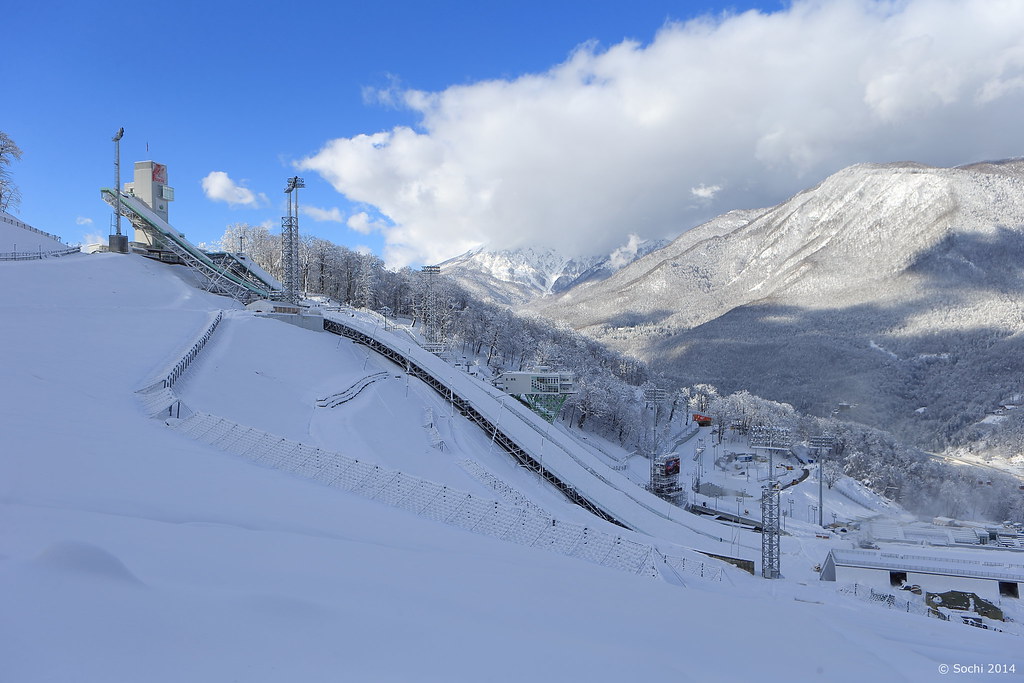
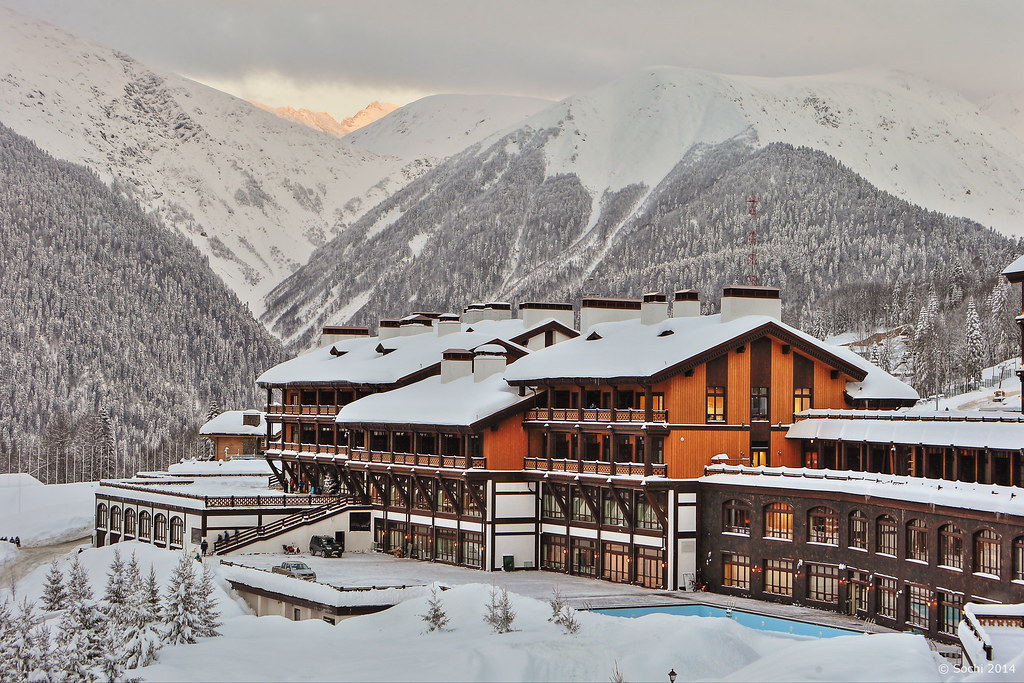
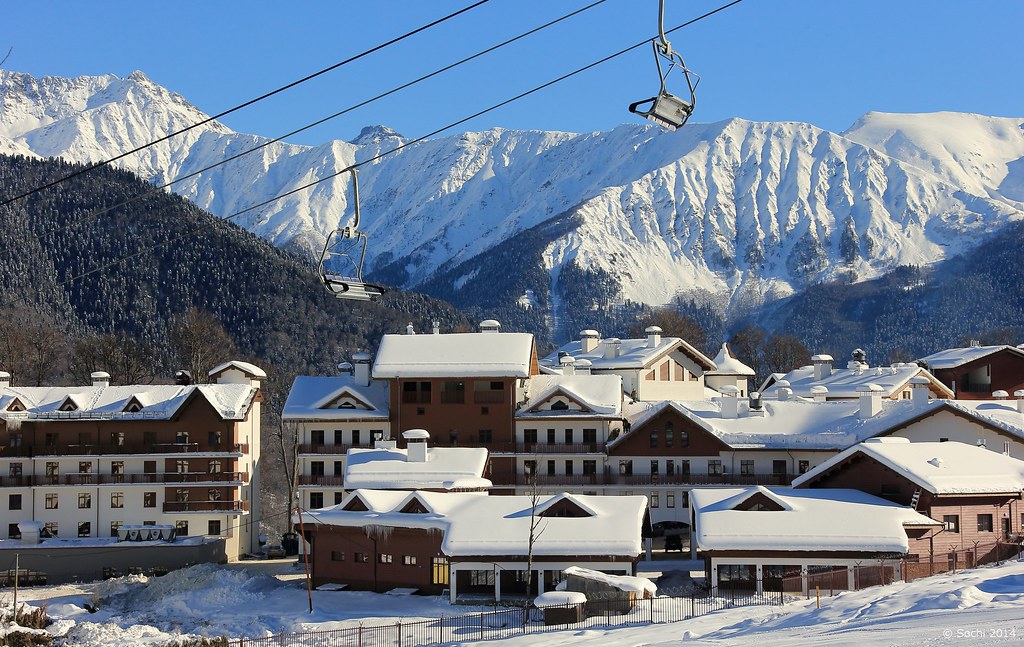
There has been an unceasing campaign to denigrate the construction in the Sochi-Adler area. Incompetence, corruption, double toilets and so on and on. In all of this, few people have been shown what has been built for the total cost of 55 billion or so US Dollars. We have a preview; but first a discussion of cost.

Most Western sources claim that the real cost of the Sochi Olympics is the 55 billion and Putin is assumed to be lying when he says the cost is 6 billion or so. Now that Navalniy has his report out that claims to measure the alleged corruption, the Western media is full of wide-eyed quotations from it. But Western discussions, and Navalniy (not, I suspect, by coincidence) ignore the other stated purpose of the construction which is to create a full-scale sports and holiday complex in Russia’s Riviera. The aim being to attract Russian tourists away from foreign holidays and provide some development and employment opportunities in the chronically depressed North Caucasus.

So what is the real cost of the Olympics? 1) All of the 55 billion or 2) just the proportion that would not have been spent if the Olympics weren’t coming or 3) something in-between? The first question to be answered is how much of the total is definitely Olympics-only spending. Here Navalniy actually agrees with Putin: from his report “Olympstroy spent $6.3 bn to construct 11 sport venues”; that is the number Putin gives.

The disagreement is over what column to put the other expenditures in. Navalniy insists they all be charged to the Olympics, Putin that they be charged to resort complex construction and necessary infrastructure improvement. That’s what the disagreement actually amounts to, not that anyone in the Western media will tell you: Putin says some is Olympics, most is infrastructure, Navalniy says all is Olympics. But they agree on the total that has been spent. Putin wants to play the Olympics costs down, Navalniy wants to play them up; so each picks his favourite split. Each is being disingenuous.

Certainly an immense amount of money has been spent on sports facilities, visitor amusements, transportation facilities, hotels, restaurants and the rest. So, Dear Reader, you decide the split. How do you judge the most expensive single project (the 5-6 billion road-rail connection to the ski resort, replacing the Soviet-era link)? Would it have been built anyway to connect the town of Adler (where, as we have interminably been told, it doesn’t snow much) to the ski resort area where it does? Or do you judge that it was only built because of the Olympics? Or should only some of the cost be assigned to the Olympics and how would you assign it? How about the airport at Adler? The port development at Sochi? The isolation hospital in Lazerevskiy district? The Adler power station? The shopping mall? Putin says none, Navalniy says all but they don’t disagree that 50-plus billion was spent overall. And, when you make your decision, what makes you think the next person would agree? The only correct answer is that, when the Olympics are gone, there will still be a vast complex of modern facilities in a place and situation that ought to be pretty attractive to tourists.

The truth is that a large high quality resort complex has been constructed, together with a great deal of infrastructure created or improved; some of this was built only because the Olympics were coming. So what is the cost of the Olympics? I don’t know either. 6 billion seems too narrow a definition but 55 billion is far too high. Can we pick a number out of the sky and say 7 or 8? Certainly a ludicrous amount of money to shell out for a few weeks of sports; probably an argument for having a permanent facility but, given that there wasn’t much there in the beginning except Nature, not absurdly high as these things are priced.

These panoramic photos show what has been done. And don’t forget, Dear Reader, Navalniy and others would like us to believe that a third of the money was stolen: look at all this stuff and decide whether that sounds right.

Russian language only, but you’ll get the idea.

http://airgorod.ru/sochi/tour.html#/pano3/

PS the toilet story isn’t true.

Why is the West waging a campaign against the Sochi Olympics?

http://us-russia.org/2067-why-is-the-west-waging-a-campaign-against-the-sochi-olympics.html

JRL/2014 /21/13

Vlad has summarised some of the barrage of propaganda that has been unleashed on us about the past, present and future disaster of the Sochi Olympics. They open in a week and we will find out who’s been telling the truth: the Western MSM or the Russian authorities. My bet is that Gian-Franco Kasper will prove correct in his forecast that the Games will be good: As to cost, “We have to see that what we did in the Alps we needed 150 years and they had to do it in five years. If you see that then it shocks you”.

What interests me is what will be the effect of this propaganda colliding with reality. People are expecting to see half-finished crummy shacks, cracked and rutted roads, no snow, double toilets, poverty, homosexual persecution and all the rest. The Games will be covered by TV and millions will watch them for hours and hours. And in the background of this or that event, they will see things like this or this or this or this or this. That’s not what they’ve been told they will see.

Barring a disaster, Western propaganda will take a body blow from reality. Millions will see that they have been lied to. There will be serious cognitive dissonance. And that’s the part of these Olympic Games that I’m looking forward to watching.

RUSSIAN FEDERATION SITREP 30 January 2014

OLYMPIC CORRUPTION. Navalniy has put out his corruption report. Not very impressive; mostly assertions. He agrees with Putin that the Olympic facilities, narrowly defined, cost US$6-7 billion. He thinks a 50-km road-rail route in difficult terrain up to the ski centre is very excessive at US$8 billion. (Follow the route yourself on Google Maps: not an easy one). He mentions a couple of occasions where people have been arrested for corruption. Various contractors are said to be Putin’s “friends”. Yes, a lot of money has been spent – US$40-50 billion – but it’s a huge infrastructure operation to create a permanent tourist resort complex, not just a few weeks of winter sports. Anyway, here’s his report, see whether he convinces you that enormous sums have disappeared without a trace. In a week or so you can see for yourself what’s been built: “We have to see that what we did in the Alps we needed 150 years and they had to do it in five years”.

SOCHI DOUBLE TOILETS. The story’s all over the place, latest here. But you’ve been had. Again. Read this.

CORRUPTION. Quite a bit in the last two weeks. The nets seem to be catching bigger fish. A deputy chief of police in Moscow arrested for taking bribes. The deputy PM of Dagestan busted for fraud. A former member of the Dagestan parliament (and, for those who think they’re exempt, a stalwart member of Putin’s support party, United Russia) ditto. But, as usual, military-connected events lead the pack. A criminal case was opened against Serdyukov’s brother-in-law (I don’t believe that Seryukov’s out of the soup yet – passing the loot off to family is a common practice). The DG of an important shipyard “suspected” of embezzlement. The Prosecutor General said inspections of the defence industry had uncovered “a huge number of violations” and 48 criminal cases have been opened. You have to agree that while there haven’t been many convictions, there certainly have been plenty of arrests.

THEY’RE BACK! Some years ago I was at the Northern Fleet base with a Canadian military delegation and, while admiring Petr Velikiy, noticed two more of the class rotting away across the bay and expected them to stay there. But it has just been announced that the refit of one of them, the Admiral Nakhimov, has begun. Well well. Petr Velikiy is presently in the Mediterranean (exercising with a Chinese warship!) and a second of that class is getting ready. I can’t resist saying that it was fun kicking Russia around in the 90s but was it really worth it? Throughout that time I was writing briefing notes warning that Russia would not always be down and that it would remember the treatment when it recovered.

DEMOGRAPHICS. The moment many of the more perceptive observers of Russia have been predicting has happened: last year, for the first time in a long time, natural increase added 20,000 to Russia’s population. Russia’s population has been growing for several years now because immigration has made up for natural decline. But the program instituted some years ago to work at the problem from both ends has paid off and, in 2013 births exceeded deaths. A fact that is unknown to many media outlets still going on about a “dying nation”.

SNOWDEN. A committee of PACE says it will invite him to Strasbourg in April to debate “mass surveillance and whistleblowing” with US officials at public hearings. Interesting to see if they do and what then happens.

UKRAINE. The West continues to support the overthrow of the democratically-elected government. (Well, Dear Readers, forget the propaganda, what else could it truthfully be called? Whether you like him or not, corrupt, incompetent, whatever, Yanukovych was elected in an OSCE-blessed election.) Whatever happens, and it’s clearly in play, I predict Ukraine will be no better off in a year’s time. It’s bitterly split (and the West keeps trying to split it further by insisting it choose NATO or EU), it’s economically feeble, it’s running out of money. For example, it’s horribly in debt to Russia for gas deliveries; what do you think the West would do about that? Provide free gas? Tell Kiev to default? Argue the amount? Lend it billions? Expect Russia to keep running the tab? Advise Ukrainians to buy more sweaters? Pontificate about Ukraine’s European destiny? What? There are no white knights and the EU itself isn’t doing all that well. And driving Ukraine into East-West tumult periodically makes the situation worse. Already Ukrainians rate the USA six-to-one over Russia as the greatest threat to peace; what will they think in a year?

© Patrick Armstrong Analysis, Ottawa, Canada (http://www.russiaotherpointsofview.com/ http://us-russia.org/)

RUSSIAN FEDERATION SITREP 16 January 2014

SOCHI. The anti-Sochi campaign is in full swing. (The Guardian gets everything in including the coming lack of snow about which it has some mystical foreknowledge). We have not just the homosexual stuff (a German reporter somewhat surprised to get the nonplussed view of the owner of one of two Sochi gay bars) but also the sad history of the Circassians. I have noticed pieces here and there concluding that Russia must “acknowledge its violent history in the region” or something. That’s odd, I don’t recall huffy op-eds calling on Canada to acknowledge how it came to possess the site of the Calgary Olympics or the USA the Salt Lake City site (opportunity there for two “acknowledgements”). What a load of pretentious rubbish! The cruel fate of the Circassians is hardly unknown in Russia and the authors of these pieces seem to be equally unaware of who they are (not Turkic. Quite the reverse in fact) but also that there are plenty of Circassians still living there. And that some are returning. This is all part of the current thrust of anti-Russia propaganda. As to corruption, these expensive Olympics (but the Russian Audit Chamber says direct Olympic expenses are more like $6-7 billion) may well exceed the Olympic norm but a lot has actually been built. While the site is ideal, the decayed Soviet infrastructure was not. Here is a list in Russian of what has been created in exchange for the 50-some billion – much more than just sports facilities: roads, bridges, power plants, tourist facilities to name a few. Moscow appears to be using the Olympics as an opportunity to make its Black Sea coast into an up-to-date tourist attraction. A website written by two Westerners, one of whom lives there shows many of these new things. There are going to be a lot of surprised Westerners; but then, Westerners depending on their media for information have been surprised by Russian reality for two decades now.

SOCHI SECURITY. As I said last time, I expect jihadists will not attack Sochi directly because it will be pretty well protected. Generally speaking, while the Olympics may attract attacks in the host countries, the games themselves are pretty safe. And that’s easy to understand: a lot of terrorism (jihadism is no exception) is done with an eye to publicity and publicity may be gained more easily by killing people nearby. Sochi will have a great deal of security thrown at it. Meanwhile in the North Caucasus a full-scale security drive is on and the authorities are having some successes. Something I will be interested to watch is the behaviour of the 400 Kuban Cossacks who have been drafted in. Cossacks have been trying to re-form for some years and find a modern use that parallels their historic functions. So: disciplined or drunken? effective or just touristy?

RUSSIA A SMALL THREAT TO PEACE. I was interested to see in an international poll that Russia hardly figured at all in the question “which country is the greatest threat to peace”. Interesting because most of the world has been subjected to two decades of propaganda about Russia’s supposed inherent lust for power, desire for empire, natural imperialism, belligerence blah blah blah. But evidently the message isn’t getting across. In only a few countries was Russia named by any more than an trivial number. My discussion here.

POLITKOVSKAYA. The interminable prosecution-bungled murder trial has acquired a new jury.

OIL SPILLS. A subsidiary of the big Russian oil company LUKoil, LUKoil-Komi, has just been fined, at the end of a long legal case, US$18.5 million for oil spills 2011 in the Republic of Komi. This is said to be the biggest fine so far for this sort of thing.

GAS WARS. Ukrainian Energy and Coal Industry Minister Stavitsky says Ukraine has stopped buying gas from Europe and will now buy it from Gazprom at the new price. I await the headlines: Russia crushes Ukraine with low gas prices.

GEORGIA. The body of former PM Zhvania is to be exhumed and sent to Switzerland for forensic testing. He died in 2005 in what was said to be an accident but there have always been suspicions that Saakashvili had him killed. The West’s standard view of Saakashvili, like its one of Putin, is propaganda and spin.

SYRIAN CW. The impressively international effort to get rid of Syria’s chemical weapons capacity progresses. The first load of stuff has left on a Danish ship from Latakia. I am informed by my source on such matters that the USA has portable equipment on a ship which will effect the actual destruction. He also told me that the Syrian Sarin was very well-made and pure. Quite unlike the stuff discovered at Goutta. For those interested, here is a summary of the August attack and conclusions: not the Syrian government. More evidence of same here and here.


© Patrick Armstrong Analysis, Ottawa, Canada (http://www.russiaotherpointsofview.com/ http://us-russia.org/)

RUSSIAN FEDERATION SITREP 2 January 2014

MAN OF THE WHATEVER. Putin is topping a lot of year-end lists these days and I find it amusing. First because he isn’t doing or saying anything new but also because of the “Occido-centric” take. Three things are usually mentioned as where Putin is said to have got the better of Obama: Snowden, Syria and Ukraine. Well, Snowden just arrived and it’s not clear that it was an extraditable offence; we should all thank Putin for stopping another military adventure founded on another piece of questionable evidence; Ukraine was neither the West’s to gain nor his to keep. But, evidently, the West is still locked in a zero-sum (dare we say “Cold War”?) fixation. More interesting, however, is the admiration that he is starting to attract from conservatives. It’s amusing to watch. But, as I said, he hasn’t changed; only the perceptions have.

JIHADISM. Much activity lately in addition to the two suicide attacks in Volgograd. A group arrested in Tatarstan on suspicion of attacks on churches in Tatarstan. Several gunfights in the North Caucasus. Bombs in Pyatigorsk and Dagestan. Three planning an attack killed in the Kabardin-Balkar Republic. Connected I suppose with the Sochi Olympics – among the “Lands of the Jihad”, much effort is put into getting publicity in order to raise money. My deduction would be that a direct attack on the Olympics is unlikely because it is a defended target: a train station – or, really, anything else – is much easier and gets the publicity.

DEBTS. In light of what I said last Sitrep, it is announced that Moscow has finally paid off the Soviet-era debts (US$3.7 billion) to the Czech Republic, Finland and Montenegro. I’ll bet that’s more money than it got back from all the USSR’s debtors.

KHODORKOVSKIY. Pardoned and in Germany. Intelligent discussion here by Alexander Mercouris. And, as a reminder that before he became a tribune of democracy Khodorkovskiy was called a criminal, this from Foreign Affairs in 2000. Amusing to realise that Khodorkovskiy then was a reason why Russia is horrible and that he still is. But Khodorkovskiy had to be differently spun so as to maintain the continuity of the propaganda line during changing realities. After all, did not Putin actually “rein in a dangerous posse of plutocrats riding roughshod over the country” as the author recommended? Poor Putin: all this conflicting advice from Americans; maybe he’s better off to just ignore it altogether.

THINGS YOU WON’T HEAR ABOUT. The government submitted a draft law to the Duma to give convicts with HIV equal rights with other prisoners.

ISKANDER MISSILES. A German paper claimed Iskander-M missiles were deployed in Kaliningrad and an MoD spokesman confirmed some were deployed in the Western Military District but not, said Putin, in Kaliningrad. “Destabilising” huffed NATO. Yes it is: Russia feels destabilised by NATO expansion, missile defence and so on. None of this is necessary.

RELIGION. Levada has come out with a poll comparing declared religious belief now with 1989. 68% call themselves Orthodox Christian today (17% then) but only 17% are even occasional church-goers. 7% call themselves Muslim (1% then). An indication of the rather conservative society Putin describes.

GEORGIAN WINE. Georgian wine has had a very good year in Russia: the first small shipment arrived in June and this year nearly half of the sales were into Russia (22 million bottles out of 45 million). It will be extremely interesting to see, now that Georgia has an arrangement with the EU, how well its sales do in Europe. My bet is that there will still be mysterious obstacles to big sales. Russia and the former USSR will be the principal market for the foreseeable future.

UKRAINE. Yanukovych in Moscow secured an agreement for discounted gas price and Moscow’s agreement to buy some Ukrainian bonds; the PM said this saved Ukraine from “bankruptcy and social collapse. Anyway, the protesters are still there so it’s not over yet (not, of course that it will be – Ukraine is deeply divided on these issues and, as long as the West keeps trying to force it to choose – first NATO and now EU – the division will continues to bleed and irritate). Meanwhile, in another example of Eurodemocracy, Latvia has joined the Eurozone despite the opposition of more than half the population.

SAAKASHVILI. Announced that he has a job in an American university. What will happen if Tbilisi tries to extradite him, do you suppose?


© Patrick Armstrong Analysis, Ottawa, Canada (http://www.russiaotherpointsofview.com/ http://us-russia.org/)

RUSSIAN FEDERATION SITREP 12 December 2013

RIAN AND VOR. The state-owned RIA Novosti and Voice of Russia radio will be absorbed into a new media conglomerate called Rossiya Segodnya with Dmitriy Kiselyov as its head. (Western propaganda line on him laid out here for easy re-typing. Note that what he said isn’t actually controversial in many countries – although it might be in Russia. But, hey, it’s Russia: say what you want.) The stated reasons were that the new organisation would be more efficient, save money and better present Russia’s image in the world. Well, Russia could certainly do with something that did a better job of getting its POV out and I was personally quite disgusted when I caught RIAN repeating the lie that Putin had called the USSR’s breakup the “greatest” geopolitical catastrophe: a state-owned news outlet should get it right. So we’ll see. As usual, the Western line is that Putin has crushed press freedom. But, feeble in 2003 and non-existent in 2008, what’s left to crush?

CORRUPTION. The Investigative Committee Head gave us some official numbers. In the last two years corruption has cost 9 billion RUB (US$271 million) (sounds low to me) of which 4 billion was recovered. More than 1600 lawmakers and local government officials were prosecuted (sounds ballpark correct to me). Putin has just created an organisation in the Presidential Administration to focus on corruption. A Sisyphean job and not to be completed in his lifetime. Or ours. Or, in truth, in anybody’s anywhere.

AMNESTY. Putin has submitted a draft resolution on an amnesty to the Duma. In commemoration of the 20th anniversary of the adoption of the Constitution, it is said to affect about 15,000 people, 1500 or so of whom are in jail. Lots of rumours: Khodorkovskiy, Pussy Riot, Navalniy; but only rumours at the moment.

PUSSY RIOT. The Supreme Court ordered a sentence review; not all mitigating factors were taken into account.

RUSSIA INC. The Economy Ministry has cut its 2014 growth estimate to 2.5% from 3%. Sounds bad eh? But a Eurozone forecast is 1.1% and a USA forecast 2.8%. So not so bad. Do you expect this context to be reported? Of course not. (Check the URLs out, Dear Readers: it’s a real clue to the way Russia is reported. The headline should read: “Russia cuts growth estimates, but still expects to do better than most anyone else in G8”. If “Putin’s rule is falling apart”, what’s happening to the rules of others?)

CUBA. Moscow will write off $29 billion of Cuba’s Soviet-era debts. As I like to point out, when the Russian Federation took over the USSR’s assets and debits, the debits were real (the Paris Group expected – and received – full repayment). The so-called assets, on the other hand, were some valuable real estate but mostly worthless obligations like Cuba’s debt. So Moscow paid 100 cents on the dollar and received a penny or two on the dollar. So, if we add this small net income to the huge capital flight (for a brief, exciting, moment Estonia was a major oil exporter – I personally saw hundreds of Russian oil tanker cars in the Narva trainyards in 1994) and put it against Western aid (much of which had to be paid back), who was subsidising whom in the 1990s? And that doesn’t even add in all the cheap energy to Russia’s neighbours. One can understand why many Russians do not consider the 1990s to be some lost paradise that Putin has stolen from them.

EU. Georgia and Moldova signed association agreements with the EU in Vilnius. I guess we’re supposed to believe that Moscow can bully big Ukraine but not little Moldova.

GAS WARS. Not the least of the problems in Ukraine is that it is broke. Naftohaz has just announced that it has agreed with Gazprom to defer payments for winter fuel deliveries to next spring. But the only way it can pay is to pry some money out of Brussels, Moscow or… Beijing.

UKRAINE. The Western destabilisation of Ukraine continues. Why it wants to do so I don’t understand. But a lot of what the West does I don’t understand – what was the Libyan intervention about? Not to improve the “human rights” situation there, that’s for sure. Ukraine is tense, divided and angry. A poll at last: 46% for the EU, 36% for the Customs Union, 19% undecided. (English). But also see this: 30% think the EU deal would be beneficial, 39% don’t and 30% are undecided. Much more complicated than the propagandistic picture the Western media paints.

SYRIA CW. The OPCW confirms all unfilled Syrian CW munitions containers have been destroyed. A private source informs me that the destruction is “field expedient” (sledgehammers) but effective. Meanwhile Seymour Hersh has a piece arguing that the famous attack was, as Putin maintained all along, a false flag operation.

© Patrick Armstrong Analysis, Ottawa, Canada (http://www.russiaotherpointsofview.com/ http://us-russia.org/)

Ukraine in the Mirror of the Mind

http://www.russiaotherpointsofview.com/2013/12/ukraine-in-the-mirror-of-the-mind.html

http://us-russia.org/1957-ukraine-in-the-mirror-of-the-mind.html

http://www.network54.com/Forum/84302/thread/1386390058/last-1386390058/UKRAINE+IN+THE+MIRROR+OF+THE+MIND

http://www.kingstonrohdes.com/russia-news/

http://www.blogtopsites.com/outpost/2599ddbc60851a6d1f4f1f1bcd281aa3

As the world knows, Kiev backed out of an association agreement with the European Union at the last moment, probably as a continuation of its long game of trying for a better deal by playing Moscow and Brussels against each other. This is a common strategy for “in-between” countries; it won’t work forever but, if well played, it can leverage a better end deal. If poorly played, however, it can produce nothing but bad feelings. The Kyrgyz Republic played the same game with Russia and the US over the Manas Air Base, eventually winning a better payment from the US. Egypt is doing the same today.

But such a simple explanation will not do for the anti-Russia brigade. It’s all about The Chess Masters in the Sky. And we see Kiev’s choice cast in Manichean terms: it is a “principal[led], some even say civilizational, choice between Europe and Russia, democracy and dictatorship, sovereignty and subordination, prosperity and poverty, modernity and mayhem. Indeed, the contrast between what Ukraine can expect from her Western and Eastern neighbors could not be starker.”. All this may be Gospel to most Westerners, but in Kiev they have to seriously ask themselves whether the EU is really the best path to Ukraine’s future. And, a sub-question: is last week’s offer the best we can get?

The other assumption is that it’s all Moscow’s doing. “EU leaders Friday revived Cold War rhetoric Friday, accusing Russia of bullying Ukraine into ditching a landmark deal so the former Soviet republic would stay locked in Moscow’s orbit.” (Sic and much repeated: does anybody read this stuff before re-typing it?) This Tartuffian fanfarade was soon followed in the report by real evidence for Yanukovych’s motives: “Yanukovych complained that the EU hadn’t offered enough in financial incentives to secure his signature.”. But ils ne passeront pas!We may not give in to external pressure, not the least from Russia” said one EU “president” (there are three of them). But the assertion that Moscow made them do it is directly contradicted by many Ukrainian spokesmen: Prime Minister Azarov said the IMF’s conditions were “the last straw”; an official statement declared the EU had not paid enough attention to “Ukraine’s needs”; many feared costs would go up; concerns about Ukraine’s independence were expressed; the EU’s moralistic additional demands were rejected. Nonetheless Russia “blackmailed” Ukraine; Putin is holding the police line in Kiev; Yanukovych “gave in to Russian pressure”; it’s Russian “blackmail” and so on.

So, the established view is that wicked Russia dragged helpless Ukraine away from the light of civilisation and back into barbaric darkness. The argument is founded on the arrogant assertions 1) that the EU represents the first and Russia the second; 2) that Russian conditions are threats but European threats are conditions; 3) that Russian financial incentives are bribes but European bribes are financial incentives. This conceit could not be more baldly put than in this New York Times editorial: “Europe’s use of trade leverage to encourage democracy is constructive and reasonable. Russia’s attempts to bludgeon former vassals into continued economic dependence are not.” In truth 1) the direction is not so obvious from Kiev in 2013; 2) are consequences of choosing one and not the other; 3) Kiev wants money. Kiev has a hard decision to make especially since Brussels refuses Kiev what it recently allowed Ottawa: a foot in two camps. (Vide Armenia).

Well, maybe 20 years ago, when the EU had a future and Russia did not, Kiev’s choice would have been easy. But that’s not the way it looks today. I invite the reader to consider the figures given by Mark Adomanis (who adheres to the curious practice of discussing such issues with facts rather than assuming the answers). The EU’s GDP/capita has been flat for a decade and its unemployment rate is getting worse. Russia, during the same time, is getting steadily better in both respects (yes, from a lower base than the EU but a higher one than Ukraine. Which is what is relevant in the circumstances). The economic part of the choice is by no means so obvious. The values part of the choice is not so obvious either to a country not enamoured with the latest European human rights diktats.

The next observation to be made is that all this is rather contemptuous of Ukraine whose leaders who are assumed to have no will of their own. Of course we have seen this common trope of the anti-Russia lobby before. The Ossetia war, for example, was described as between Russia and the West – Georgians were pawns and the Ossetians not even mentioned. From the viewpoint of “stratospheric analysis” there are no small players; indeed there are always only two players; the others are mere pieces moved by The Chess Masters in the Sky. But, in the actual world they are actors and good analysis should take their calculations into account. One would have thought that the collapse of the “Orange Revolution” and “Rose Revolution” would have taught somebody something about what pawns feel about their pre-arranged futures.

Ukraine is a divided country: I speak of “Russian Ukraine” and “Polish Ukraine” to conveniently describe its two different influences. And, as long as people are not willing to let Ukraine be what it actually is – part of each – these divisions will be perpetrated and strengthened. First the West demanded it join NATO – although few in Ukraine actually wanted to; now it demands that it turn its back on Russia and become the EU’s next reserve of cheap labour and cheap real estate. But Ukraine faces both ways: it is unnatural to expect it to face only one way. It didn’t work during the so-called “Orange Revolution”, why would it work any better today? Especially since the Western option is much less attractive now than it was then. And, after government replacements in Greece and Italy and bank raids in Cyprus, who can honestly say that the sovereignty cost for Ukraine would be higher in the Customs Union?

Amusingly, what is missing in these spins of Russia the bully trying to hold onto its crumbling empire is the fact that Moldova and Georgia did sign agreements with the EU at the Vilnius summit. But how could that have happened? How is it that Moscow’s “bullying” only works on its biggest neighbour but not on its smaller ones?

It surely couldn’t be that Kiev quit the agreement for its own reasons, could it?

In all likelihood, the game is not over and Kiev is calculating its next move in its attempts to leverage money out of Moscow or Brussels, or both; Yanukovych is back talking to Brussels.

RUSSIAN FEDERATION SITREP 28 November 2013

SAAKASHVILI AND RUSSIAN OPPOSITION. Remember when Moscow said a Georgian politician had secretly met with Russian oppositionists? Remember when everyone laughed? (“risible charges” details “immediately suspicious” “political”) Well, Saakashvili just admitted it. Once again, Moscow turns out to be closer to the truth than the others.

DISAGREEMENT. It’s a common assumption in the West that no one dares disagree with Putin. Not so. Lawyers from 80 firms have issued an open letter protesting the proposal to merge the Supreme Arbitration Court into the Supreme Court. The billionaire and politician Mikhail Prokhorov has joined many others against a proposal to modify the rules on tax investigations. We shall see.

REPORTING. If anyone thinks there’s much difference between reporting on Russia and outright propaganda, compare these stories. Anti-gay laws bar Selena Gomez from Russia. Elton John will perform despite homophobia. They can’t both be true, can they? Does anyone actually spend an instant thinking before they squash things into the anti-Russia mould of the moment?

LITVENENKO. A British court has ruled that national security demands secrecy. Remember what a simple case this was sold to you as: enemy of Putin murdered by Russians? What do you suppose they’re trying to hide?

GREENPEACERS. The last one has been granted bail and maybe they will be let go. But, again, I am fascinated by the hostility to GP shown in comments to puff pieces like this one. Again, dear readers, I notice there no campaign in the Western media on this one. Is it because the campaign-funder-in-chief is no more? Or do people not like GP? But they wouldn’t have liked Pussy Riot if they’d known what it actually was

CORRUPTION. Putin vowed to continue to struggle against official corruption, regardless of rank or party membership, reminding his listeners of the fate of Vyacheslav Dudka, former governor and member of United Russia, now in prison.

SERDYUKOV. Charges of negligence have been brought against him. The investigation grinds away.

AT LAST. After years of delay, the carrier INS Vikramaditya (Admiral Gorshkov as was) has been handed over to the Indian Navy and sailed for there. India is a large arms customer for Russia and likely to continue to be.

UKRAINE AND EU. At the last moment, Kiev walked out of the EU association agreement. Despite the PM’s explanation that IMF’s conditions were “the last straw”; despite the official statement that the EU did not pay enough attention to “Ukraine’s needs”; despite fears that an agreement would put costs up; despite concerns about Ukraine’s independence; despite the EU’s interfering demands; the MSM has concluded that it knows the real reason: Russia. This piece actually describes the years of insults and goalpost-moving Kiev endured from Brussels before it puts the blame on Russia. The arrogance of the West is astonishing: whatever we want is, ipso facto, in your best interests too. Kiev is playing its suitors for the best deal possible from its perspective and the bidding is still open: Azerov just said that this does not mean the Ukraine will join the Customs Union. Curious that Kiev might see Moscow as a more trustworthy partner but, after replacement of governments in Greece and Italy and bank raids in Cyprus, perhaps it has reasons to fear for its independence as a small player on the edge of the EU. Thanks to the great psychic divide between east and west in Ukraine, there are large protests. Canada just negotiated a free trade deal with the EU and it is a member of NAFTA. Is it impossible for Ukraine to have some of both?

IRAN. The agreement was announced but there is already disagreement about its meaning. Doesn’t look good.

GEORGIA. Giorgi Margvelashvili was inaugurated as President last Sunday, Saakashvili did not attend and is still out of the country (bet he doesn’t come back). Irakli Garibashvili is the new PM. True to his word, Ivanishvili announced he was leaving politics but will remain “active” (I still think Putin should have done that). Some Western players are starting to worry that Saakashvili may be charged with crimes – well, all I can say is that they should have paid closer attention to what they were supporting in the first place. Remarks by the US Ambassador have caused some excitement in Tbilisi: “Abkhazians and Ossetians were treated by Georgians in the same way as Russians had treated Georgians and Georgia will have to apologize for the mistakes of the past”. Is Washington starting to see reality, or is this just a blip?

© Patrick Armstrong Analysis, Ottawa, Canada (http://www.russiaotherpointsofview.com/ http://us-russia.org/)

RUSSIAN FEDERATION SITREP 14 November 2013

CHICKENS ROOSTING 1: CHINA. It was fun to rant on about the “energy weapon” and how Russia had to be cut out of pipelines: it was weak, getting weaker and had no other market. But it isn’t, didn’t and hasn’t. Rosneft’s CEO says annual oil sales – 7 million tonnes – to China ought to bring in US$2.4 billion a year in export duties. Russian energy sales to China can only get bigger because it suits each country’s interests. Why sell to a market that accuses you of evil intent when there’s one that doesn’t?

CHICKENS ROOSTING 2: EGYPT. It was fun to expand NATO and push Russia around: it was weak, getting weaker and had no friends. But it isn’t, didn’t and hasn’t. Washington’s stunningly incompetent – but still arrogant – policy is turning Cairo towards Moscow and Moscow is happy to reciprocate. A Russian warship is in Alexandria and Lavrov and Shoygu are about to visit. Much talk of close relations and arms sales. Given the excitement about its trivial presence in Tartus, just think of the ventricular fibrillation when the Russian Navy gets a base in Alex. And, keeping up the impression of revival, Russia’s snazziest-looking warship is now in the Med.

SNIPPETS. Not everyone is shunning Russia. Moscow and Tokyo have agreed to (finally) hold peace treaty talks in 2014. Italy and Russia have held a joint naval exercise in the Aegean. The King and Queen of the Netherlands visited. It’s been slower than I expected, but I do believe that reality is gradually taking hold: Russia is a “normal” country: it has its own interests and peculiarities to be sure, but shunning and excoriating it doesn’t get anyone anywhere. It’s neither going away nor fading away. And it’s not anybody’s enemy either.

ATTITUDES. VTsIOM has completed a series of surveys showing how life in Russia has changed in the past 10-15 years. In the process some hoary myths are dispelled. Russians feel their finances are OK, are reasonably happy, half the households have cars, they save more, support conscription (!), happy to stay in Russia and lots more. (Machine translation) (details in Russian). In short – contrary to the standard Western reportage – Putin & Co don’t have to cheat to get elected: they are actually doing those things that governments are hired to do. It’s really quite simple.

POLICE REFORM. The Interior Minister announced that lie detector tests will be required upon hiring or promotion. At the time it was evident that Medvedev’s big effort had started well enough but had fizzled out.

ANOTHER OTHER RUSSIA. As a reminder of the Russia that you don’t hear much about: a procession of an important icon in St Petersburg attracted about 50,000 people.

UNPANIC!VLADIMIR PUTIN IS AFRAID OF HER”. Tolokonnikova has not been disappeared into Siberia: she’s been moved closer to home and her accusations against her former prison are being looked at. But, hey, it’s Russia: write whatever you like. And no, he’s not afraid of her: the US anti-Russia lobby is very ignorant.

THE MILLS GRIND SLOWLY. The Serdyukov investigation has been extended. Galina Starovoytova was murdered 15 years ago. Two shooters were convicted in 2005 and an organiser in 2006. On Friday, former LDPR Deputy Mikhail Glushchenko was charged with organising the murder. In the Politkovskaya trial, the entire jury has been dismissed, presumably taking things back to square one. This case is interminable. The first attempt failed; a key witness confessed but the re-trial has been cursed with endless delays.

SYRIA. Another reason to thank Putin: apparent dissent in the US intelligence community.

GEORGIA. President Margvelashvili says he won’t live in Saakashvili’s preposterous presidential palace and suggests it could become a university. Ivanishvili is holding to his intention to quit politics (at least visibly) and has named the Interior Minister, Irakli Garibashvili, to succeed. Under the new Constitution the PM will have the bulk of the power. Saakashvili appears to still be out of the country: I wonder if he will return? Ivanishvili observed that there were many charges that could be brought against him.

GAS WARS. Unfortunately Kiev wasted the decade of cheap gas not reducing Soviet-era waste and the next half decade in NATO-inspired fantasies. Now that Russia charges something like the real price it is forced to economise because it is having trouble paying and its own resources cannot take up the slack. So it says it will buy no more from Gazprom this year. The Prime Minister insists that Kiev wants good relations with Moscow. Thus, one hopes, the current dispute will stay economic rather get the “Orange Revolution” politicisation.

© Patrick Armstrong Analysis, Ottawa, Canada (http://www.russiaotherpointsofview.com/ http://us-russia.org/)

Russian “non-systemic” opposition and U.S. Foreign Policy

http://us-russia.org/1909-russian-non-systemic-opposition-and-us-foreign-policy.html

JRL/2013/ 202/31

Certainly there is a section of the Russian population that does not like Putin and any of his works. Numbers can only be guessed at but the percentage is probably not more than fifteen and not less than five. This opposition is very diverse – it ranges from super nationalists who don’t like his statements about the multi-ethnic nature of Russia to those who want him to do everything their (idealised) West wants him to do. Of these, a certain percentage is nurtured and encouraged – and until the new NGO law, funded – by outside interests.

Some of these outside interests are governments – the American NGO industry, now virtually a wholly-owned subsidiary of the present Administration – is an important engine of funding and propaganda but there is also a section of opinioneers who believe Russia to be the principal enemy of the West; a feeling that appears to be stronger in the Anglosphere than elsewhere. Some of these outside interests are individuals who, while they might march in step with and cross-fertilise the government interests, are self-actuated.

The Russian opposition can be distributed along two axes: one ranging from wholly home-grown to wholly foreign-created, the other from super-nationalist to super-liberal (“liberast” as some call it). Generally, foreign support goes more to the liberast end of the spectrum than the nationalist although Navalniy is an interesting exception. (And, I believe, the first of the foreign-boomed oppositionists to have a foot in each camp. Which thought is worthy of another essay.)

Internally the opposition is waning for several reasons. First pro-gay rights campaigners co-exist uncomfortably with super-nationalists: they may agree to dislike Putin but they disagree about everything else. Second, it is clear that the overwhelming majority of Russians support Putin, his team and their general course (and don’t have much regard for the protesters, either). Third, protesting, in the absence of real political organisation – and when you are a fraction of a fraction you must operate inside the system – is clearly a waste of time. And, let us not forget that the Russian NGO law has had the success that its American model had in forcing things out of the shadows.

Whatever trivial damage this inchoate opposition is doing to Putin & Co inside Russia, it is very important to the outside anti-Russia campaign. We are now at the point where Putin’s name cannot be said without the “ex-KGB, jails opponents, steals elections, kills reporters” modifiers. And there are plenty of Russian oppositionists (oddly free to speak and move around) to corroborate these charges.

External support for the anti-Putin fractions in Russia has received two heavy blows. First was the suicide of Berezovskiy. He was instrumental in organising and funding the important Politkovskaya, Litvinenko and Pussy Riot memes (“Putin kills or imprisons his opponents as shown by…”). But he is gone and there is no one to replace him. Washington suffered humiliation on Syria – ready to go a-bombing with media campaign up and running, Moscow pulled the casus belli out from under it. The only thing for Washington to do was to pretend that that’s what it meant all along (which it did). Suddenly the “Putin is anti-gay” campaign shut down: just as suddenly as it had started when it became clear Snowden was staying in Russia. So, the two biggest anti-Russia meme generators have been switched off.

And off they are: consider the Greenpeace case. Total silence from governments, NGOs and the media (not total actually: the Netherlands and Greenpeace itself; but otherwise….). No campaign on this one.

Another interesting by-product of Washington’s Syrian flop is a growing respect for Putin. This phenomenon has been remarked on by others but it bears watching. Thanks to a decade of innuendo and falsehoods, people do not like Putin but they are coming to recognise that he is a very effective leader and stands up for his country’s interests.

So we might (might) be seeing the end of the anti-Russia propaganda machine. A machine that has, I believe, been operating with only very brief pauses, since the 1830s or 40s.