MEMORY LANE MAUNDERINGS

You don’t hear much from me these days for reasons attentive readers know. But I do pay to keep my site alive and I re-read things from time to time.

Usually pretty gloomily: if only my former masters had listened to me (and plenty of others – I can name three at least in Ottawa right now) we wouldn’t be as far up Shit’s Creek without a paddle as we are now. (But, in a year, we’ll be farther up yet.)

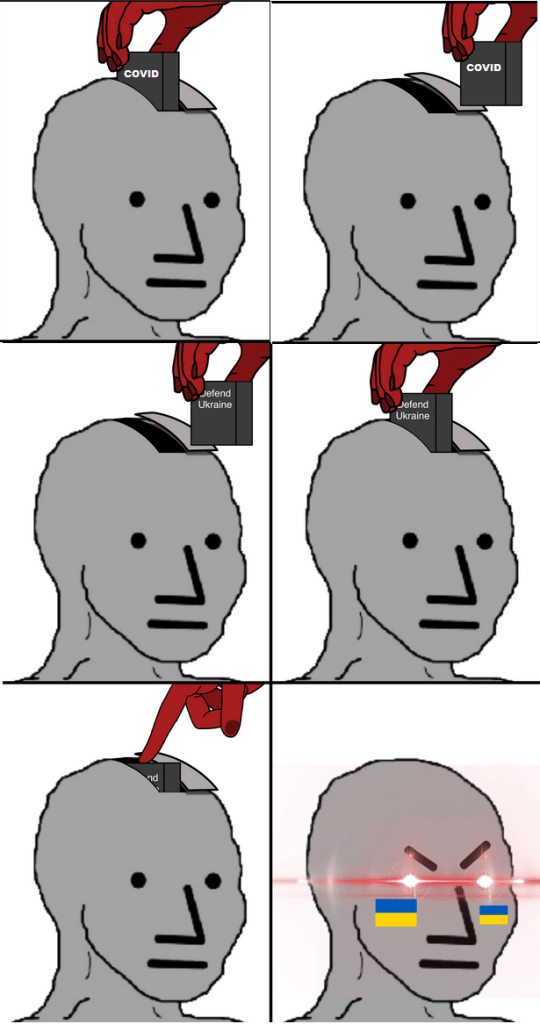
Ah well, old guys do burble on. Sometimes I feel like this guy.

But here’s one from ten years ago. Any of you remember when Georgia was the exemplar of how nasty Russia was? But who’s heard of Georgia these days? And where is that shining knight of democracy Saakashvili now?

THE WORLD IS CHANGING

About five years ago I wrote this in a Sitrep:

SAUDI ARABIA. The visit of Salman bin Abdulaziz was pretty significant I think. The deal on the petrodollar was that Riyadh would insist on USD for payment in return for protection. Because Washington’s wars in the MENA have only made Iran stronger, Riyadh cannot think the deal is working out and it may be looking for a new sponsor: it happened before when Abdulaziz switched from London to Washington. My thoughts here. I believe that the sale of S-400 air defence systems could be a geopolitical gamechanger. Another of Moscow’s strengths is that it talks to everybody: and so it has offered to mediate between Riyadh and Tehran. Because Washington takes sides, it is useless should Riyadh want to negotiate its way out of messes with its neighbours. “The success of the Euro-Asian triptych is based on the essential principle of transforming enemies into neutral players, neutral players into allies, and further improving relations with allied nations.” Slowly, patiently, bit by bit the long game is played.

So what do we have now? About to join BRICS; diplomatic relations with Iran; Mandarin lessons in schools; Renminbi in oil transactions is coming. Sounds as if history has restarted.

I don’t pretend to know much about the Saud family enterprise, but I’ve always suspected that there’s a council of elders or something like that in the background. If so, I wonder if they looked around and decided that, of all the descendants, MBS was the most like his grandfather.

A remarkable man; I recommend this biography.

And finally, who’s the dominant man in this photo?

AN ANNIVERSARY NOBODY REMEMBERS

On this day, 12 August, in 1939, British-French-Soviet military talks began in Leningrad. The British delegation was headed by an obscure admiral and the French by an obscure general; they had taken five days to get there by boat. The Soviet delegation was headed by the Defence Minister and the Chief of the General Staff. At the first meeting the Soviet side said it was there to negotiate a real agreement to combine against Hitler; what were they authorised to do? To talk said the Frenchman, let me get back to London said the Brit. A couple of days later London said he was there to talk. Not an auspicious beginning.

About a year after Hitler took power, Moscow realised Hitler was coming for it and everybody else. At Stalin’s direction, the Foreign Minister, Maksim Litvinov, starting pushing “collective security”: everybody who was threatened by Hitler should get together to resist him. Obviously, the three principal powers, Britain, France and the USSR, would be the leaders, but Poland, Romania, Hungary, Czechoslovakia were all on Hitler’s hitlist. Alone they would be eaten one by one, only united could they stop Hitler.

Litvinov didn’t have much success: he did get a treaty with France in 1935 but it turned out to have little content in practice. Meanwhile Poland, vitally important to any anti-Hitler scheme because it lay between the USSR and Germany, signed the very first non-aggression pact with Hitler in 1934 and collaborated in the carve-up of Czechoslovakia in 1938. Washington rejected overtures in 1934. The UK signed a naval agreement with Germany in 1935. Litvinov kept trying, and people like Winston Churchill agreed, but the Munich agreement of September 1938 pretty well killed it off. Without Britain, France or Poland, it couldn’t be done.

The fuse was burning: in March 1939 Berlin tore up the Munich agreement and dismembered the rest of Czechoslovakia; in April it denounced the Polish pact. Litvinov got Stalin’s agreement for one last try. Even though Stalin replaced Litvinov with Vyacheslav Molotov, he was still hopeful enough to send his two top military people to meet the Anglo-French delegation when it finally got there. But what hope was there for a collective anti-Hitler alliance if the only result from years of trying was a low-level delegation with no negotiation powers and lethargic time appreciation? Evidently nothing would be coming from London or Paris or Warsaw. A low-level Anglo-French mission in, say, 1935 would have been a base to build on but in late summer 1939 it was absurd.

If you were Stalin, what would you do when your Plan A is dead? You know war is coming, you believe Hitler when he says his aim is to seize lebensraum to the east. Your potential allies don’t get it. What would you do?

While London and Paris dither and Warsaw dreams dreams (what dreams? Hitler just tore up the non-aggression pact you were counting on: you’re next) Hitler strikes. How about a non-aggression pact? Stalin seizes the chance, the agreement is immediately signed. Stalin knows perfectly well that Hitler is going to attack the USSR and so he starts to grab as much territory to the west as he can and put off the day as long as possible.

In a couple of weeks you will see a whole bunch of op-eds saying that those two evil BFFs got together to do the dirty on Poland and start the war. You won’t see any mention of the failed Soviet collective security attempt. Why not? Well, the authors probably haven’t heard about it (lots of things have gone down the memory hole) and, if they had, it would spoil the propaganda value of their rant about wicked Russia.

FURTHER READING. I knew this happened because AJP Taylor’s Origins of the Second World War was a set text in my university days and he mentions it. But the man who’s really done the big work on it today is the Canadian historian Michael Jabara Carley. Here’s an interview with him that covers the bigger picture and his trilogy about to be published, an essay on what I call Stalin’s Plan A, and a book 1939: The Alliance That Never Was and the Coming of World War II. Every now and again the corporate media forgets to forget it: “Stalin ‘planned to send a million troops to stop Hitler if Britain and France agreed pact'”.

(By the way, while the West has pretty much forgotten this, you can be sure that Moscow hasn’t.)

MIKHAIL GORBACHEV

He died on Tuesday. I haven’t bothered to read many of the obits that have been published but I will make a guess about their general flavour. The Western ones will say he ended the Cold War, removed the Soviet threat and, maybe, introduced fast food to Russia (a reverse on the supposed origin of the bistro). The Russian ones will be rather uncomplimentary and will blame him for the miseries of the 1990s when jobs disappeared, savings evaporated, deaths increased and Russia was pushed around.

I approach this with a somewhat different view that, as it happens, I share with Putin. I believe that, when Gorbachev became GenSek in 1985, the USSR system had exhausted its possibilities. I believe, but cannot find the reference, that Putin told Oliver Stone that the system was inefficient at its core, but more of his thoughts on the viability of the USSR can be found here. Not very complimentary: ideals not accomplished, too much repression ab initio, he pays credit to Stalin’s industrialisation for victory in 1945 but concludes “However, in the final count, the inability to embrace change, to embrace technical revolutions and new technology led to a collapse of that economy”. Or how about this from September 2005? “In the Soviet Union, for many decades, we lived under the motto, we need to think about the future generation. But we never thought about the existing, current, present generations.” (PS he never said “the greatest catastrophe”: that’s a mistranslation.)

In short, I believe that the USSR was heading for trouble in 1985: the 1990s were bad enough but I’m not sure they would have been much better with other players.

So Putin and I would agree that Gorbachev inherited a failing idea. He had three solutions. You can agree that they didn’t work but they were better than Andropov’s notion of tightening discipline and Chernyenko’s inertia. Glasnost was an attempt to start telling the truth, or some of it, and perestroyka attempted a side-to-side, top-to-bottom reconstruction. His third idea was a redesign of the union itself. This, by the way, gave me my first revelation that many Western “experts” formed their conclusions without data. At a Wilton Park conference, one of these “experts” built his whole presentation around the assertion that nobody had any idea what Gorbachev’s New Union would be. This after three drafts, produced after much negotiation, had been published in full in the media! I was rather amazed at this ignorance and equally so to be casually brushed off when I pointed out that the texts had been published and that I had read them.

The idea of re-creating the union was put to a referendum and, with certain revealing exceptions, passed by a solid majority. But the New Union never happened. A day or so before it was due to be implemented, the August coup attempt took place. I have written about my involvement in it here. As it turned out, that killed it. Shortly afterwards, for whatever reason, Yeltsin, Shushkevich and Kravchuk declared the USSR dead and gone and Gorbachev resigned and the flag came down. And that was that. (And, not for the last time, Kiev dismissed the wishes of the Ukrainian population: 59% of the total electorate having voted yes in the referendum.)

Could something different have happened? Had the treaty had been signed; that would have been different. Most of the USSR would have remained, with some republics at the edges gone, and a lot of the suffering of the breakup of such an absurdly centralised economy would have been prevented. The Union of Sovereign States would have remained a major player in the world system and there would have been less likelihood of outsiders meddling.

But it didn’t happen and therefore Gorbachev failed in what he was trying to do. Which was something dangerous and rarely successful.

But was it so bad for Russia? A question few ask. In 2005 Vladislav Surkov told Der Spiegal that he still remembered what he felt when the USSR went down: “an enormous sense of relief, as if a huge leech had dropped from my back”. He thereby showed himself to be one of the few people who understood that, whatever may have been true at other times, by the 1980s the RSFSR was subsidising the whole thing. Most people thought the opposite. Here’s Leonid Kuchma in 1993 “…like everyone else, I believed that Ukraine is so rich that it provided for the entire [Soviet] Union. It turned out that it is, in fact, rich. However, was it really a provider?” Thus, from Russia’s perspective, the end of the USSR was actually a good thing. Admittedly, a lot of misery had to be gone though first. But, of the former fifteen – and the 1990s were bad for all the USSR successor states, not just Russia – which is doing the best now? The Baltics with their huge population loss? Ukraine or Moldova, contenders for the poorest countries in Europe? Central Asia? The Caucasus? For those who think Russia is a decaying sinkhole I invite a perusal of these Google Street View shots of numerous cities taken ten years apart.

So, despite the strong dislike most Russians have for him, they may come to have a kinder view over time.

(PS I can’t give hyperlinks for everything. Most of this happened pre-Internet and the quotations are from the collections I made at the time.)

HIATUS

I am going to pause this site and my other activities for a while until I see how things break out.

What was a post-retirement hobby – a continuation of my job of trying to figure out what was happening in Russia – has now led to accusations of being a Russian agent of disinformation.

Deviation from the approved narrative is to risk, at best, being accused of sowing disinformation and, at worst, of treason.

I’m too old for this.

WHAT I GOT WRONG AND WHY

I did not expect Russia to invade Ukraine. I was quite definite about it several times: “Russia will not invade Ukraine” I said. I envisaged several possibilities but nothing like what we have seen in the last weeks. My argument was based on the assumption that Moscow did not want to take ownership of, in Åslund’s words, “the poorest country in Europe“. I still do not think that it does – I believe that Moscow wants a neutral and de-nazified Ukraine that is a buffer between it and NATO. I am also coming to believe that Novorossiya, more or less in its historical borders as formed by Katherine when recovered from the Ottomans, will be independent. The chance that it would remain part of Ukraine has probably passed. As I wrote in 2014 “In short, the West broke Ukraine, it now owns it. Or, to put it more precisely, it owns that part that Moscow doesn’t want. And what part that is is entirely up to Moscow to choose“. Moscow is choosing now.

So why was I wrong? What did I miss?

I believe I missed three things – two I didn’t know about and one that I did but did not properly weigh. These are: the nuclear weapons issue, the planned strike on LDNR and the biolabs.

At the Munich Conference, Ukraine President Zelensky alluded to the possibility that Ukraine might make nuclear weapons. There is a widespread belief that Ukraine gave up its nuclear weapons after the breakup of the USSR but that is nonsense. Yes, some of the USSR’s nuclear weapons were based in the Ukrainian SSR, but they were no more under Kiev’s control than the American ICBMs in Montana are controlled by the state government in Helena. The West was delighted when Moscow undertook responsibility for the USSR’s nuclear weapons just as it was delighted when Moscow undertook to give Russian citizenship to any Soviet citizen left over, to move all USSR weapons and troops out of Eastern Europe and take on the USSR’s debts. Imagine if Moscow had said that it would only take on the RSFSR’s share (about half) of these things and Moldova, for example, should be responsible for its share. It was later that Moscow’s acceptance was re-purposed into accusations – we (and I well remember it) were very relieved at the time: no abandoned nuclear bombs or missiles, leftover weapons, ownerless armed soldiers, unpaid debts, people without citizenship. So Ukraine never “had” nuclear weapons. But Zelensky’s raising the possibility was seen in Moscow as a real threat: if not a fully functioning nuclear weapon, then surely a dirty bomb could have been constructed – there’s plenty of radioactive material at Chernobyl after all and Ukraine inherited a stock of Tochka missiles. So that was a factor. Whether Azarov’s assertion that NATO was actually planning such a thing is true or not, Moscow could not afford the possibility. Putin himself mentioned this as a factor.

The second reason for the attack was the assessment– and some documents have been said to have been discovered – that Kiev was planning an assault on LDNR in March. Definite proof has not yet surfaced but the fact that the bulk of the Ukraine Armed Forces were positioned to attack LDNR rather than to defend Ukraine’s borders is suggestive. Observing this, Moscow evidently decided on a pre-emptive strike. Putin has mentioned this as a factor.

I knew there were a large number of US biolabs around the world – indeed the whole world is now aware of the one in Wuhan and I think I was generally aware that there were some in Ukraine. In this respect the investigative reporting of Dilyana Gaytandzhieva is essential reading. A “conspiracy theory” only a week or so ago, none other than Nuland herself has admitted their existence. The story has therefore morphed from conspiracy theory, through a few benign labs to the Russians might make an attack with dangerous materials from them. I remembered the revelation some years ago that the US military had been collecting DNA samples of Russians. But I didn’t put these fragments together. How big an issue this actually was we should find out: documents are said to have been captured. Putin has referred to this issue.

So there are three reasons for an attack now: a pre-emptive attack to stop the possibility of nuclear or biological attacks and to protect LDNR. It is now evident that the “ultimatum” was a last chance: had Washington, the actual power behind the scenes, seriously addressed Moscow’s concerns – NATO membership for Ukraine and forcing Kiev to follow the Minsk Agreements – there would be no war today. Moscow evidently decided on Plan B sometime towards the end of 2021 and began preparations.

Then, as the war progressed, I forgot Clausewitz’ famous dictum that war is the continuation of politics by other means and over-estimated the speed of developments. At the start, Putin put out the aims: de-nazification, disarming and no NATO. The first to be accomplished by killing them and by trials and exposure of the survivors, the second aim is mostly completed and the third has not yet happened (although Zelensky periodically hints at it). These aims can be achieved by violence or by negotiation (aided by violence – the “other means”). The Russian operation will continue until all three are accomplished. I do not foresee Russian troops advancing much into Western Ukraine: let NATO, Poland especially, have the joy of dealing with Galicia.

But, at the end of the day, there will still be something called Ukraine and plenty of Ukrainians next door to Russia. Moscow prefers that these Ukrainians not hate them and that requires careful and cautious movement and the least number of widows and orphans. Therefore, the first week was fast moving but since then there have been many pauses for talks – without much result as far as we know – pauses for humanitarian corridors and local ceasefires. As Colonel Macgregor says, the Russians are trying to minimise civilian casualties.

Russian forces have a good deal of experience in this sort of thing from Syria and we see the slow encirclement of cities and military deployments always with exit routes to allow civilians (and combatants who have lost their will to fight) to get out of the way. The Chechens in particular are skilled at this. (And not least because of their experience of fighting Russia in the First Chechen War. And who would have expected that turn of events?) Larry Johnson puts Russia’s advances in context here.

Therefore the military operation is in service to the politics and is slower than it would be if only destruction were the aim.

RUSSIA UKRAINE 2

TACTICS, STRATEGY AND OPERATIONS

So far the Russian military operation in Ukraine has been a reconnaissance in force preceded by the destruction of the supplies and headquarters of the Ukrainian Armed Forces by standoff weapons. The object being to suss out where the Ukrainian forces are, to surround them, to check existing Russian intelligence against reality and, at the same time, destroy known headquarters, air and naval assets, supplies and ammunition depots. And, perhaps, there was the hope that the speed and success (Russian/LDPR forces dominated an area of Ukraine about the size of the United Kingdom in the first week) would force an early end (aka recognition of reality).

At the moment they are readying for the next phase. The long column that so obsessed the “experts” on CNN is the preparation for the next phase. And that is this: “You didn’t get the hint, so now we have to hit you”. The fact that the column has been sitting there indicates that the Russians know they have complete air superiority. Secondly it is a message to the Ukrainian armed forces that it’s over, give up. (And one should never forget that the Russians/Soviets have always been the best at strategic deception, so who knows what’s actually there versus what the images show?)

As far as I can see they’ve created three cauldrons (encirclements). Probably the most important one is the one around Mariupol where the main concentration of Azov, the principal nazi force, is. Another is being established around the main concentration of the Ukrainian Armed Forces facing LDPR. And there appears to be another developing to the east of Kiev. A super cauldron of all three is visible. The nazis will be exterminated; the ordinary Ukrainian soldier will be allowed to go home. The nightmare question is how many ordinary Ukrainians will be free to choose.

The dilemma for the Russians is city fighting. They do not want to have a Raqqa in which every building is destroyed, every person killed and solitudinem is declared to be pax. They know that at the end of the day there will still be Ukrainians and they will want them to be friends: Washington can create solitudes far away, but Moscow cannot create them nearby. This greatly complicates their problem when they try to clear the nazis out of Mariupol knowing that the nazis are using the city’s people as hostages. The same problem exists, to a lesser degree, in the other cities of Novorossiya. My guess is they will surround most cities and hope that Zelinsky & Co come to their senses. But I fear that the Mariupol battle will be horrible.

There are some slight indications, on Day 8, that Ukrainian negotiators are realising that neutrality is something they have to agree to. I also see the realisation creeping up on the American side.

The ultimate Russian aim is not visible. By this I mean the ultimate strategic aim; we know what the grand strategic aim is. Are the Russians planning to create a Novorossiya which will be independent or are they aiming to create a Novorossiya which will be a bargaining chip with rump Ukraine? I think the answer depends on what Zelinsky and Kiev (and the locals) decide. In about a week’s time, an independent Novorossiya will exist and Russia will continue to have the hammer.

I would expect large-scale surrenders of the Ukrainian Armed Forces to begin in the next 24/48 hours (Chechen forces already claim one and have an impressive collection of “trophies” to prove it). A significant proportion of the Ukrainian Armed Forces is now surrounded and, as is usual (vide Sun Tsu) the Russians have left them an exit.

GRAND STRATEGY

The impotence of the EU and NATO is clear to everyone (Well, OK, not anyone on CNN, or in the US Congress or in the halls of power in the West. But they are not the whole world). In this respect, I recommend watching Riyadh – Abdul Aziz was very good at seeing how the wind blew and one can assume his descendents are too.

The 97, or whatever they were, fighter planes that were excitedly announced, are obviously not coming. The no fly zone can’t be “declared”. The Chechens have picked up a lot of MANPADs that NATO supplied. All that NATO support will get you is destruction when you fight the war it suckered you into and an extra special Christmas card when you’re defeated and ruined.

We are seeing the collapse of post Cold War triumphalism, “end of history”, “unilateralism” and all the rest of it. Reality is biting, and biting hard. All you have to do is watch CNN’s parade of talking heads and “experts” speculating about how crazy Putin is: they don’t understand, therefore he must be nuts. For the West, as it has been, it’s over. The confusion, the bullshit, the boasting, the hysteria, the bans: the West has nothing left in the locker. Pour Russian vodka down the toilet, fire a singer and director, change the name of a drink or a salad, ban cats or trees, sanction a Russian plutocrat and steal his yacht, wear a blue and yellow t-shirt. Pathetic. And don’t, under any circumstances, allow a Russian outlet to tempt the sheeple with “disinformation”. Just like the USSR but stupider. And who thought stupider was even possible?

Judo is about deception and using the opponent’s strength against him. Putin, the judoka, has judoed the West into suicide. Put your money in our banks, we can confiscate it; put your assets in our territory, we can steal them; use our money and we can cancel it; put your yacht in our harbour, we can pirate it; put your gold in our vault, we can grab it. That is a lesson that will resound around the world. A naked illustration that the “rules-based international order” is simply that we make the rules and order you to obey them. In 2 or 3 weeks everybody in the world who is on the potential Western hit list will have moved his assets out of the reach of the West. Xi will permit himself a small smile.

As to Western sanctions against Russia, I think there’s a very simple answer to that: last week 1000 cubic metres of gas cost $1,000; today it’s over twice that. Next week it certainly won’t be cheaper. Ditto for aluminum, potash, titanium, wheat. Russian airlines lease their planes; now what? Russian rocket motors. What the people in the West do not understand is the ruble is the currency the Russians use inside the country but the price of oil and gas is the Russian currency outside the country. I am astounded at the stupidity: they’re cutting their own throats and destroying their own economies.

Russia sits back and laughs: fly into space on your own broomstick.

The world order has changed. Week Two.
RUSSIA UKRAINE 1

I’m surprised both of the size of the operation and the type of operation. While I did expect standoff destruction of the nazi units and considered the possibility of standoff destruction of Ukrainian military assets I did not expect to see troops on the ground other than a few Spetsnaz. The operation is much, much more than I expected. Putin & Co surprised me too.

Had I been at home I would have read Putin’s speech earlier and understood sooner. What he is talking about is what the Soviet Union tried to do from 1933 onwards: namely to stop Hitler before he got started. This time Russia is able to do it by itself. In other words, Putin feels that he is making a pre-emptive attack to stop June 1941. This is very serious indeed and indicates that the Russians are going to keep going until they feel that they can safely stop.

I believe that I am starting to see the outline of what they’re trying to do. Bear in mind that the aims to de-militarize and to de-nazify are rather large. I believe Putin and Company have decided to do them thoroughly and that is the reason for the troops on the ground.

At the large end, the grand strategy, is the destruction of  NATO  and the so-called New World Order. Scott Ritter has explained this in his piece. The “new” new world order will be that as described in the joint Chinese-Russian statement I have discussed elsewhere.

It will be obvious that NATO is useless and its friendship worthless. In fact, NATO/Western support is dangerous because it makes you think you have something when you actually have nothing. In a week it will be clear to all who can think that Washington and its minions cared nothing for Ukrainians – they were a sharp stick to poke the Bear with. Many will notice.

At the next level down, the strategy, the aim is to make the Kiev government an offer it can’t refuse. Essentially the demand will be, as I believe Lavrov has outlined, a Ukraine that is neutral, the nazis removed from power, and with a serious degree of autonomy given to its many minorities. Failing that, I think we will see Novorossiya as an independent force and Ukraine subjected to periodic winnowings. On a more positive note, this would allow Zelinsky to become the president he was actually elected to be. Furthermore, it is worth pointing out that the Ukrainian Declaration of Independence states that it should be a neutral country. The desire to get into NATO is the result of Nuland’s 5 billion dollars of  “democracy assistance”.

Moving down to the operational level, I believe Mariupol is going to become very important. First it appears to be the main nest of Azov which is the most powerful nazi grouping. Second, with Russian forces coming from the east, LDPR forces coming from the west and Russian forces coming in the rear, there is the opportunity to form a cauldron. The forces trapped inside the cauldron (котёл) will be running short of supplies, have no air cover and have their command-and-control seriously degraded; they can be left to come to their senses and take the offer of putting down their weapons and going home.

Putin in his most recent statement has made it clear that he regards the Ukrainians as the victims of a coup and therefore innocent of the crimes. One would expect Russian intelligence to have a very good appreciation of who supports them and who does not.

Being in a hotel, I have the opportunity to waste my time watching CNN. I am truly fascinated by how completely clueless the so-called experts, generals, politicians, that they have on are about this. They have no understanding of the Russian motives, they have no conception of what is actually going on, and they can’t see what is in front of their faces. My personal favourite is the US senator that says Russia is running out of food because it’s a communist country and therefore needs to conquer more agricultural land. This is a man whose office is bigger than your house, has a staff of dozens with a huge budget and that’s what he thinks is going on.

The new new world order was born two days ago.

RUSSIAN FEDERATION SITREP 14 FEBRUARY 2022

UKRAINE. I see no reason to change what I wrote in 2014: “Why Russia Hasn’t and Won’t Invade Ukraine” except to add that Ukraine has become even more ruined. But I do smell preparations for some sort of false flag event or goading the always excitable nazis to do something to provoke a reaction from Russia. (Note the Atlantic Council preparing the information battle space here: Why Azov should not be designated a foreign terrorist organization.). I’m sure Russian intelligence is aware of everything and ready. I would therefore not be surprised to see Russian action with stand-off weapons to obliterate the nazi formations and possibly, depending on the extent of the provocation and involvement of forces that Kiev actually controls, rear area Ukrainian military or leadership targets. The destruction of the military power of the nazi elements in Ukraine will change the power relationships there; all the boilerplate about how they don’t get many votes ignores the reality that they have lots of guns (tanks too). Take away their guns – and them – and it will be very different. A probable result is a series of revolts in Novorossiya and the collapse of any pretence of central power. In short: provocation leads to Russian response leads to delamination of Ukraine; probably pretty quickly. Again, I expect Russia to have all sorts of things prepared. On the other hand, no provocation or false flag and things will limp on. If there is one thing we should have learned in the last twenty years it’s that the Russian team is much, much more competent than the Western team. But – and this is news to most Western “experts” – the Putin Team’s primary job is looking after Russia, not saving Ukrainians from their nightmare; that they must do themselves. We reach the next stage in the destruction of Ukraine begun because Washington thought it could ignore The First Rule of Ukraine (although its Ambassador warned it.)

POTENTIAL SURPRISE. I don’t think Zelinsky’s stupid. He must realise that his “friends” are not his friends: “I think there’s too much out there about a full-scale war from Russia, and people are even naming dates. The best friend for our enemies is panic in our country, and all this information only creates panic, it doesn’t help us.” Is he starting to understand that there is only one player whose word he can trust? If he does, everything suddenly turns upside down.

READING. I can’t think of a better single source explanation of what’s going on in and around Ukraine than this by Scott Ritter: “The Ultimate End of NATO“. Pass it to people who are starting to question the organs of state propaganda.

RUSSIA/CHINA. The Russia-China manifesto is, I think, a very important statement. I cover some of the things that struck me.

PORTENTS OF THE END. Quite a few aren’t there? Truckers all over the place. China-Russia manifesto. Ukraine. The exposure of the futility of NATO and the so-called Rules-Based International Order. Incompetence of the Western ruling class. Inflation is gathering. Mysterious military accidents.

© Patrick Armstrong Analysis, Canada Russia Observer